Fixes
August 14, 2026
Why Has My Concrete Benchtop Gone Dull?
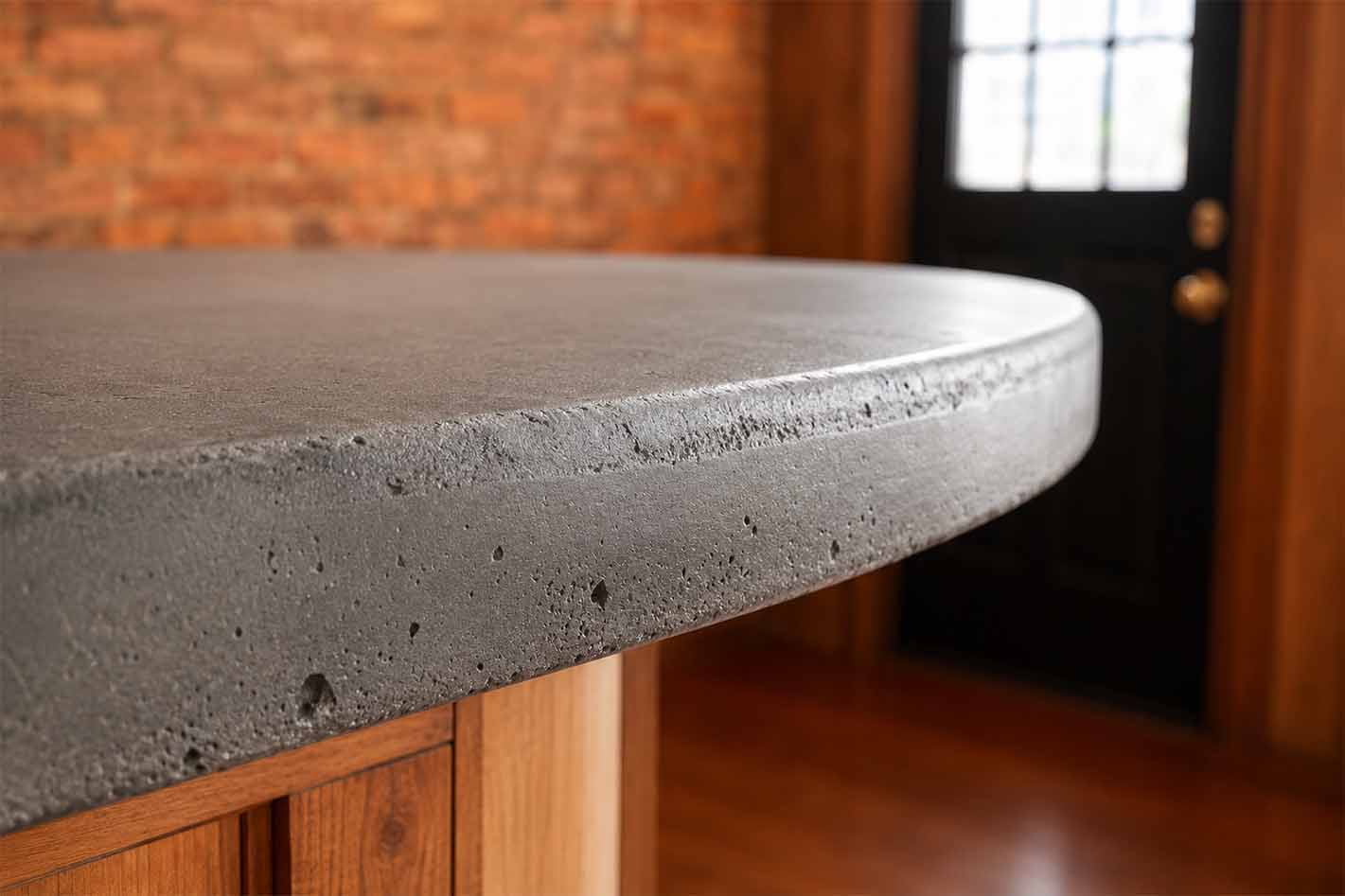
Nine times out of ten the concrete is fine and the sealer has worn out. Here's how to tell, what causes it, and what it takes to bring the top back.

Nine times out of ten the concrete is fine and the sealer has worn out. Here's how to tell, what causes it, and what it takes to bring the top back.
The short answer: the concrete is almost certainly fine. What's worn out is the sealer sitting on top of it. Kitchen surfaces are hard on sealers, and once the protection is gone the concrete underneath starts marking, staining and looking flat. It's fixable, it costs a fraction of replacing the top, and the most common cause is a cleaning product you're using without realising it's the problem.
Concrete benchtops don't really wear out. Sealers do.
If your top looked sharp when it went in and now looks tired, patchy or permanently smeared no matter how much you clean it, this is almost always what's happened.
Concrete is porous. Left bare, it soaks up everything that touches it: oil, wine, coffee, citrus, water. On a kitchen bench that would be a disaster within a week.
So a sealer goes on top, forming a protective layer between the concrete and everything you do on it. That layer is what makes the top usable, and it's also what gives it much of its sheen.
Here's the part people don't realise. That layer is consumable. It's designed to take the punishment so the concrete doesn't, and taking punishment uses it up. On a benchtop, which gets more chemical and physical abuse than any floor in the house, it wears faster than people expect.
Your top hasn't failed. Its protection has run out.
A few quick checks.
The water test. Drop a small amount of water on the surface and leave it a minute. If it beads up, the sealer is still working. If it soaks in, darkens the concrete, and leaves a temporary dark patch, the protection has gone.
Look at the busy areas. Compare the space in front of the sink or hob with a corner nobody uses. If the busy area is duller, that's wear, not a problem with the concrete itself.
Check whether marks come off. Surface marks that wipe away are one thing. Marks that stay after a proper clean mean liquid has reached the concrete, which means the sealer isn't stopping it any more.
Look for patchiness. A top that's shiny in some places and flat in others is a sealer that's worn unevenly, which is exactly what happens on a benchtop.
This is the most common accelerator, and it's usually accidental.
Vinegar. The biggest culprit by a distance. It's the go-to natural cleaner in half the kitchens in the country, and it's acidic. Acid eats sealers, and then it starts on the concrete. If you've been wiping your benchtop down with vinegar and water, that's very likely why it's gone dull.
Lemon juice, and citrus generally. Same problem. A cut lemon left sitting on a bench will leave a mark.
Bleach and bathroom cleaners. Too harsh. They strip protection rather than clean it.
General purpose spray cleaners. Many contain degreasers that break sealers down over time. They're not doing visible damage on day one, which is why nobody connects them to the problem two years later.
Abrasive pads and creams. Physically scour the sealer off, usually in exactly the spots you scrub hardest.
What you should be using is mild soap and warm water, or a cleaner specifically described as pH neutral. That's it. It sounds too simple, and it's genuinely what the surface needs.
Oil. Cooking oil is one of the hardest things for a sealer to keep out, and kitchens are full of it. Splatter around a hob is a common place for the first dull patch to appear.
Heat. Hot pans placed directly on the surface can damage a sealer even when the concrete underneath is unaffected. Mats aren't fussiness, they're maintenance.
Wine, coffee and anything strongly coloured left sitting. A sealer buys you time to wipe things up, not immunity.
Simple use. Chopping boards sliding, appliances being moved, plates and pots. Thousands of small contacts over a few years add up.
Sometimes, partly, and it's worth understanding the limits before you buy anything.
Some tops can be re-sealed over the top of what's there, if the existing sealer is worn but intact and the surface is clean. That works best on a top that's dulled evenly and hasn't started staining.
Where it goes wrong is when the old sealer is patchy or partly gone. Applying new sealer over that traps the unevenness underneath and locks it in, and you end up with a top that looks worse than before you started. Stains that have reached the concrete won't be removed by sealing over them either. They'll just be sealed in.
You also need to know what's currently on the top to choose something compatible, and most people don't, particularly if the top came with the house.
If the top has dulled slightly and evenly, a careful DIY re-seal is a reasonable thing to try. If it's patchy, stained or badly worn, it needs the surface taken back first.
The reason restoration works so well on concrete is that the surface can be cut back and started again, which isn't true of most benchtop materials.
The process is straightforward. The old sealer and the top layer of concrete come off by grinding. That takes the staining and marking with it, because most of it never got deeper than the surface. Then the top is polished back up to the finish you want, and sealed properly again.
What you end up with is genuinely a restored top rather than a patched one. On most benchtops the difference is dramatic, and it costs a fraction of replacing the thing.
Two honest limits. Deep staining that has soaked well into the concrete may lighten rather than disappear entirely. And chips or structural damage can be repaired, but the repair may be visible depending on where it is. We'll tell you which applies to your top before starting rather than after.
More on how we finish and restore concrete tops here.
There's no single number, because it depends entirely on how hard the top works. A busy family kitchen bench and a guest bathroom vanity are different worlds.
The reliable indicator is the water test. When water stops beading and starts soaking in, the protection is due, whether that's been two years or eight.
Checking it occasionally is worth doing, because re-sealing a top that's just started to wear is a much smaller job than restoring one that's been left until it's stained. Same principle as looking after a concrete floor, and the same reason it pays to catch it early.
Your concrete benchtop has almost certainly not failed. Its sealer has, which is what sealers are supposed to do eventually.
Stop using anything acidic on it, do the water test, and if it's soaking in, get it looked at. Most dull tops come back looking better than the owners expect, and it's one of the more satisfying jobs we do.
Got a benchtop that's seen better days?
Send us a photo and we'll tell you honestly what it'll come up like, or Jay can take a look in person. No obligation and no call centre.
Jay will come and look at it, tell you honestly which service it needs, and give you a fixed price. No obligation and no call centre.