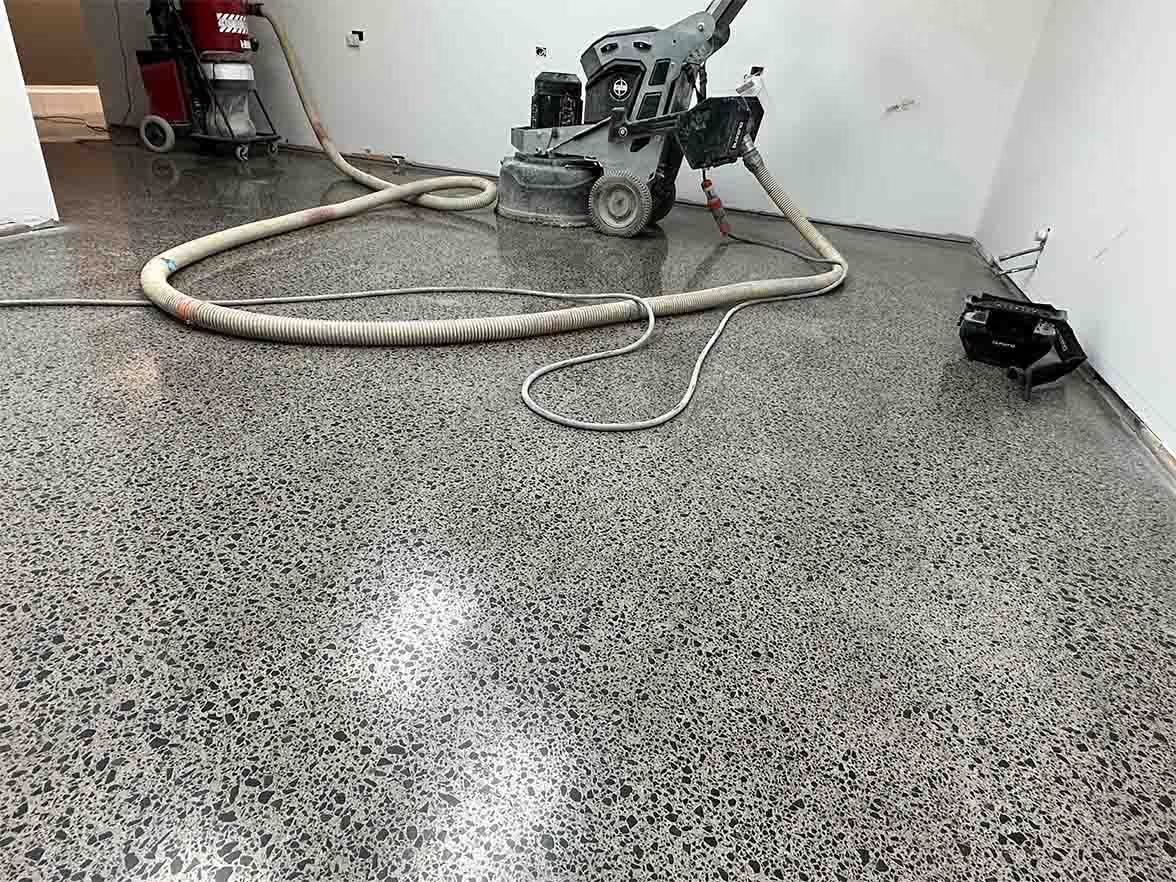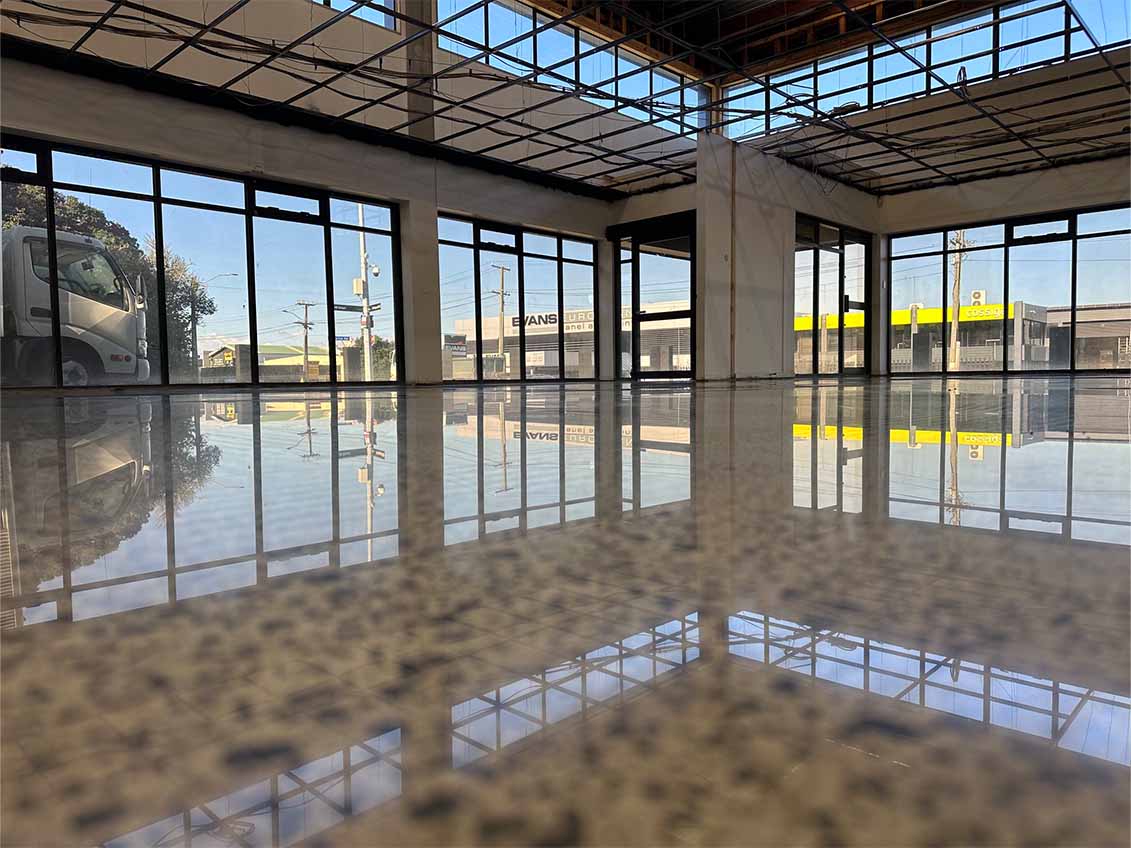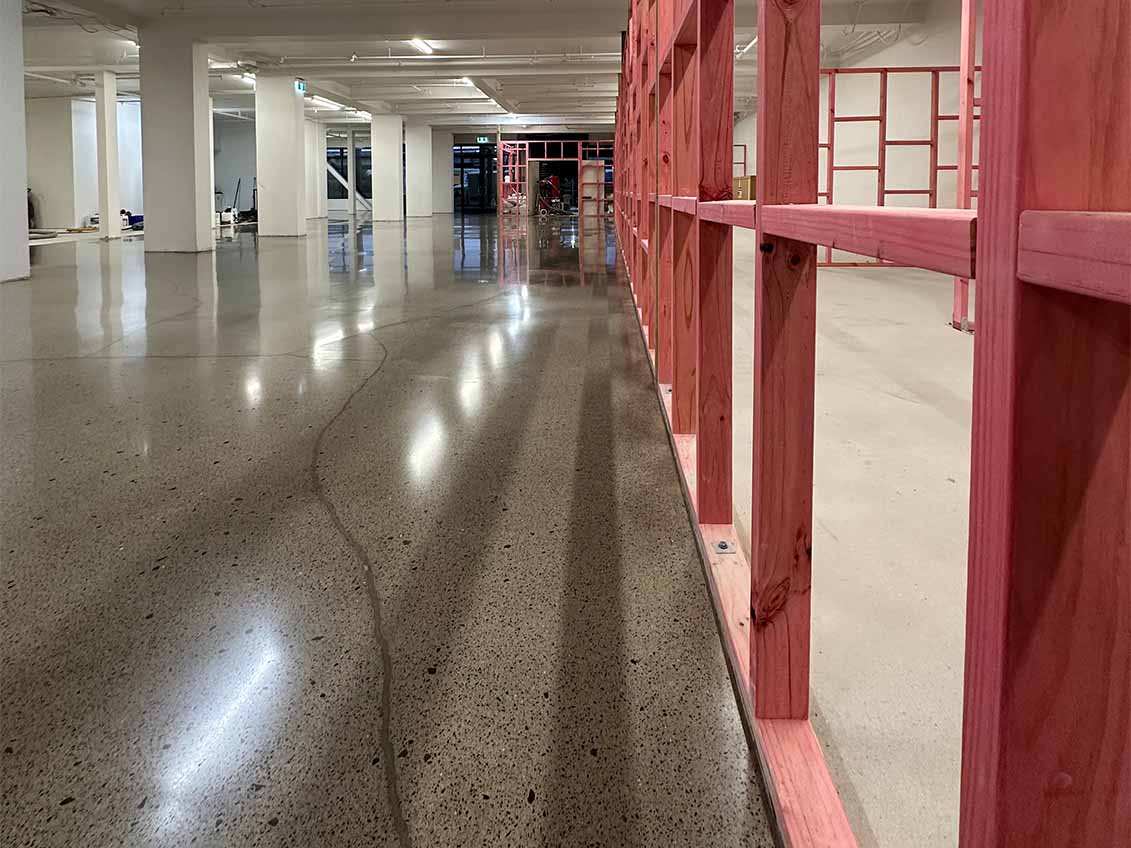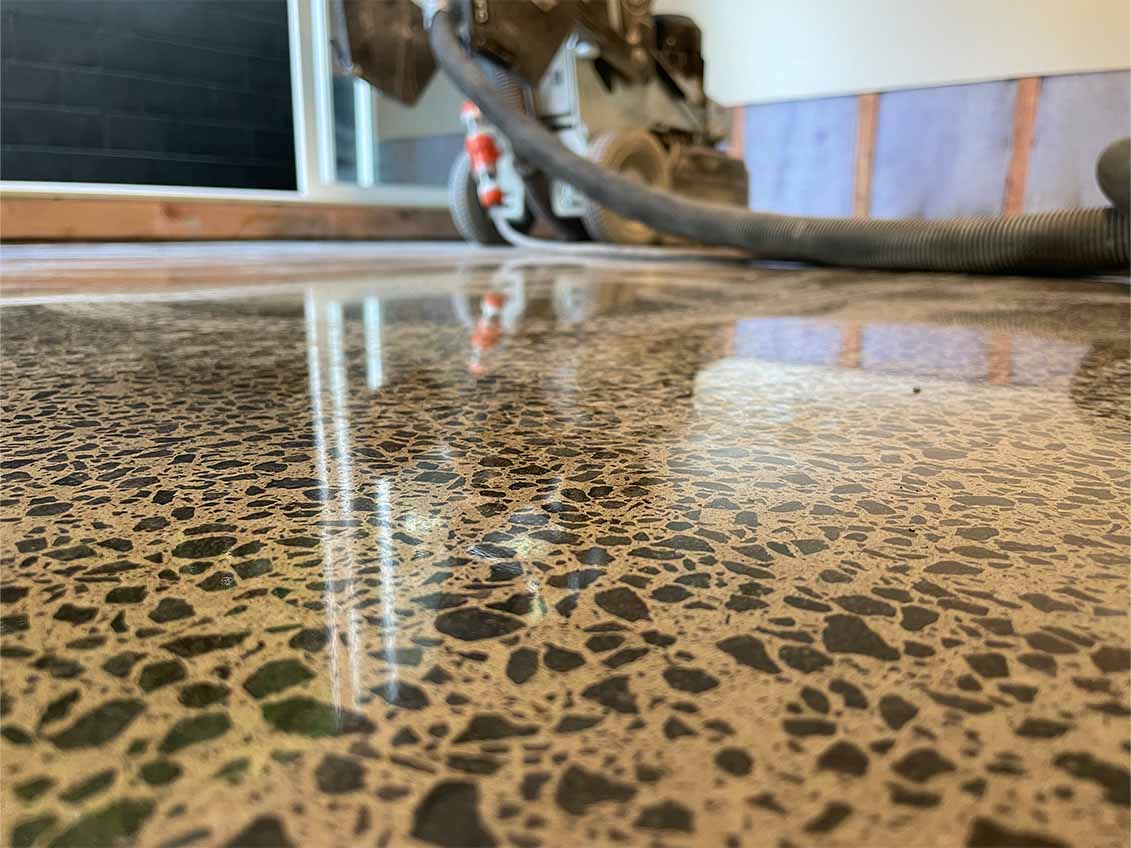


Grind and seal is exactly what it sounds like. We grind your slab with diamond tooling to 120 grit, which cuts back the top surface, flattens the floor, and exposes as much or as little of the stone inside the concrete as your slab allows. Then we protect it with a quality sealer in the finish you've chosen.
Here's the honest difference between this and a full polish. Grind and seal stops at 120 grit, at the end of the rough grinding stages. A full polish keeps going through much finer stages until the concrete itself is polished. So with grind and seal, the shine comes from the sealer on top, not from the concrete underneath.
That isn't a shortcut we're glossing over. It's the reason the service works. Because the finish is a sealer, the job is faster, it costs less, it holds up to sunlight outdoors, and it can give you a true matte or satin look that polishing simply can't produce.
One thing worth knowing when you compare quotes: if someone offers you "matte polished concrete", they're describing a sealed floor. We'd rather just call it what it is.
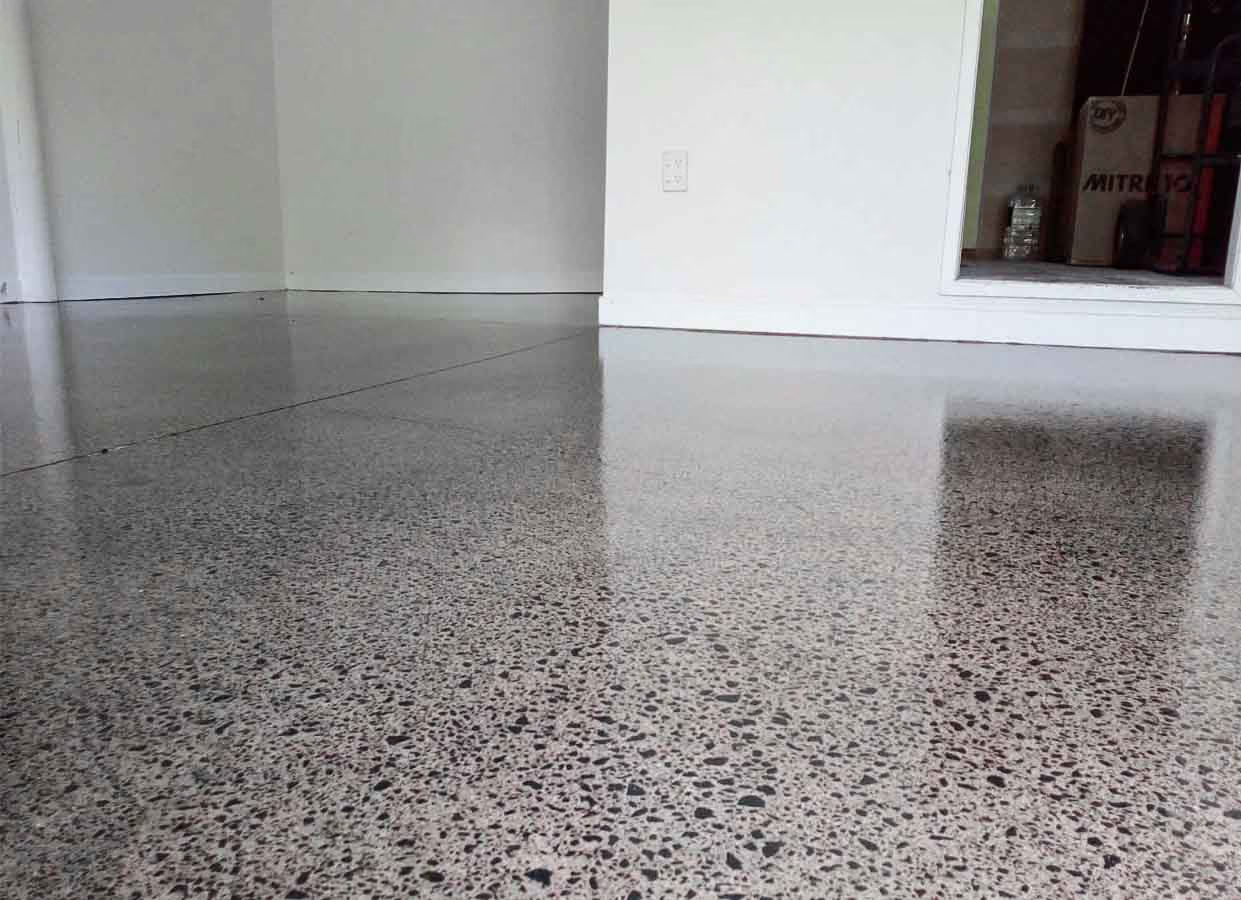
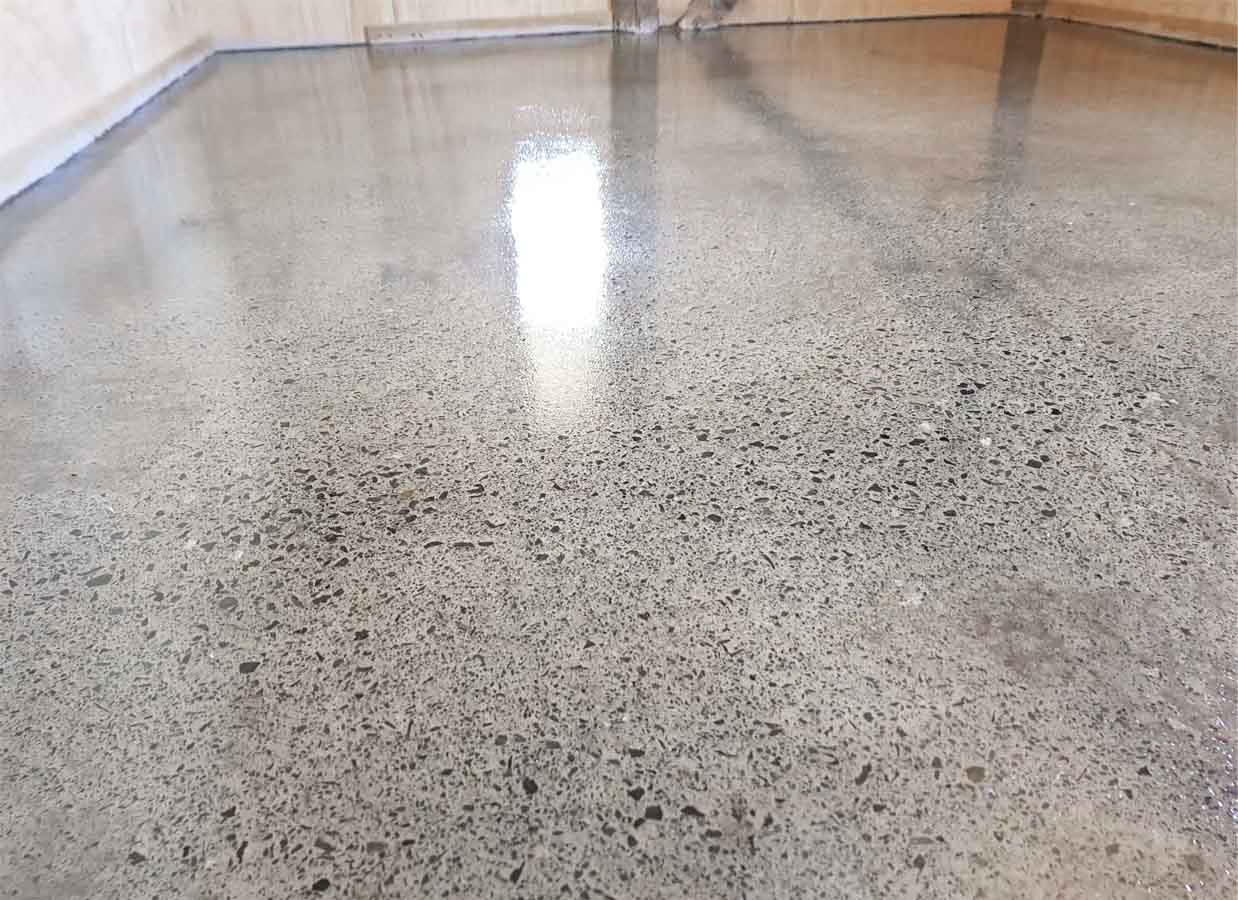
Garages, sleepouts, rentals and back-of-house commercial floors don't always warrant the cost of a full polish. Grind and seal gives you the exposed concrete look for a good deal less.
Older or softer slabs that wouldn't hold up to full polishing handle a grind and seal comfortably. It's the usual answer for tired concrete, and it's what Jay will recommend if your slab isn't up to a polish.
Patios, paths and pool surrounds need protection that won't break down in the sun. Sealers are made for that. Polished floors belong inside.
A grind and seal takes noticeably less time than a full polish, which matters when you're opening a shop, settling on a house or reopening after a fitout.
Those finishes only come from sealers. If you want low sheen rather than shine, this is the service that gives it to you properly.
And if a full polish really is the right answer for your floor, we'll tell you that and quote it instead. Same team either way.
Concrete is stone held together by cement paste, and how deep we grind decides how much of it you see. Your slab sets the limit though. Where the aggregate sits and how it was placed decides what's actually achievable, so not every floor can reach every level. Jay will tell you which of these yours can realistically give you.
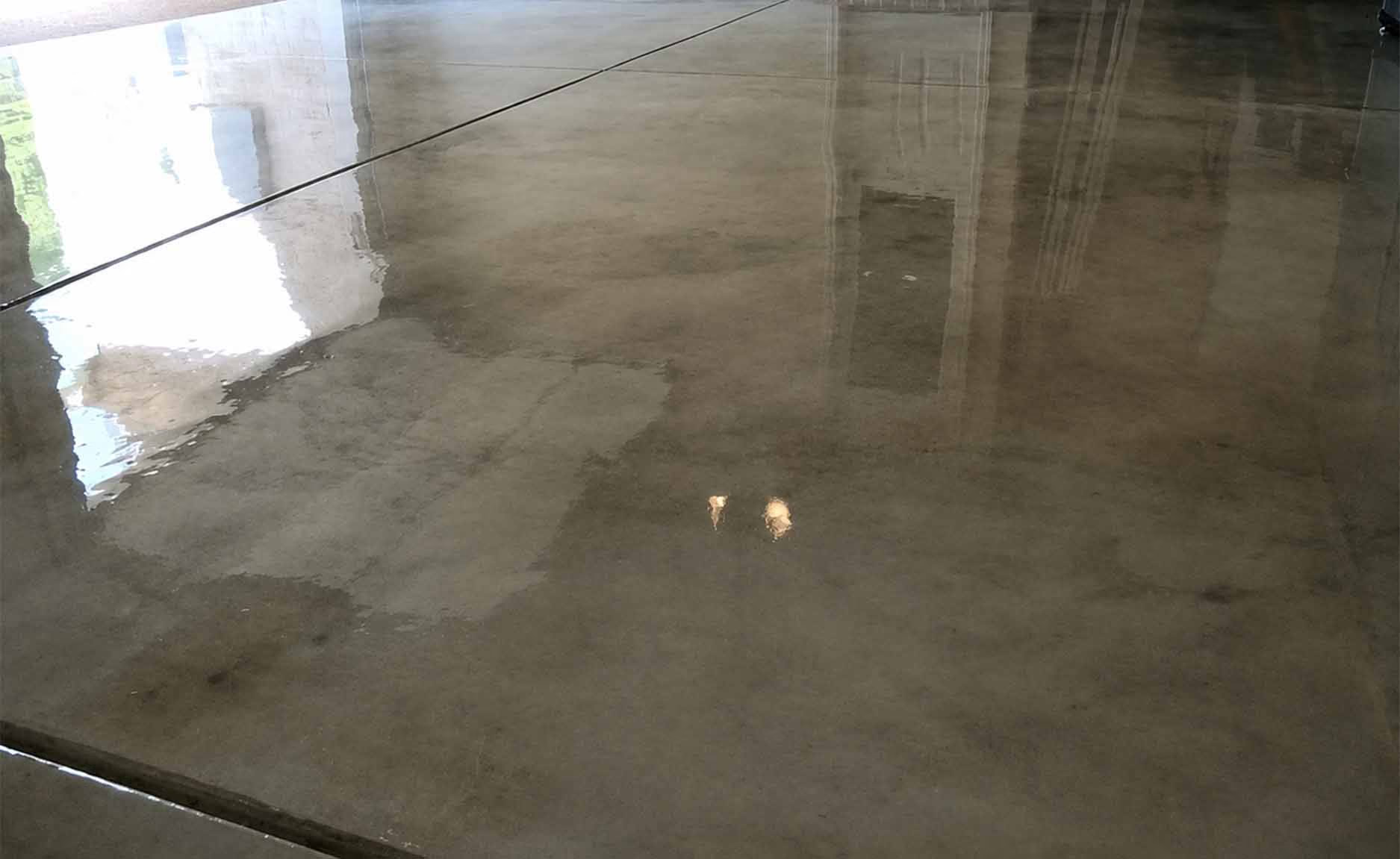
Barely any grinding. We clean the surface up and seal it as it is. The most affordable option for concrete that's already in good shape.
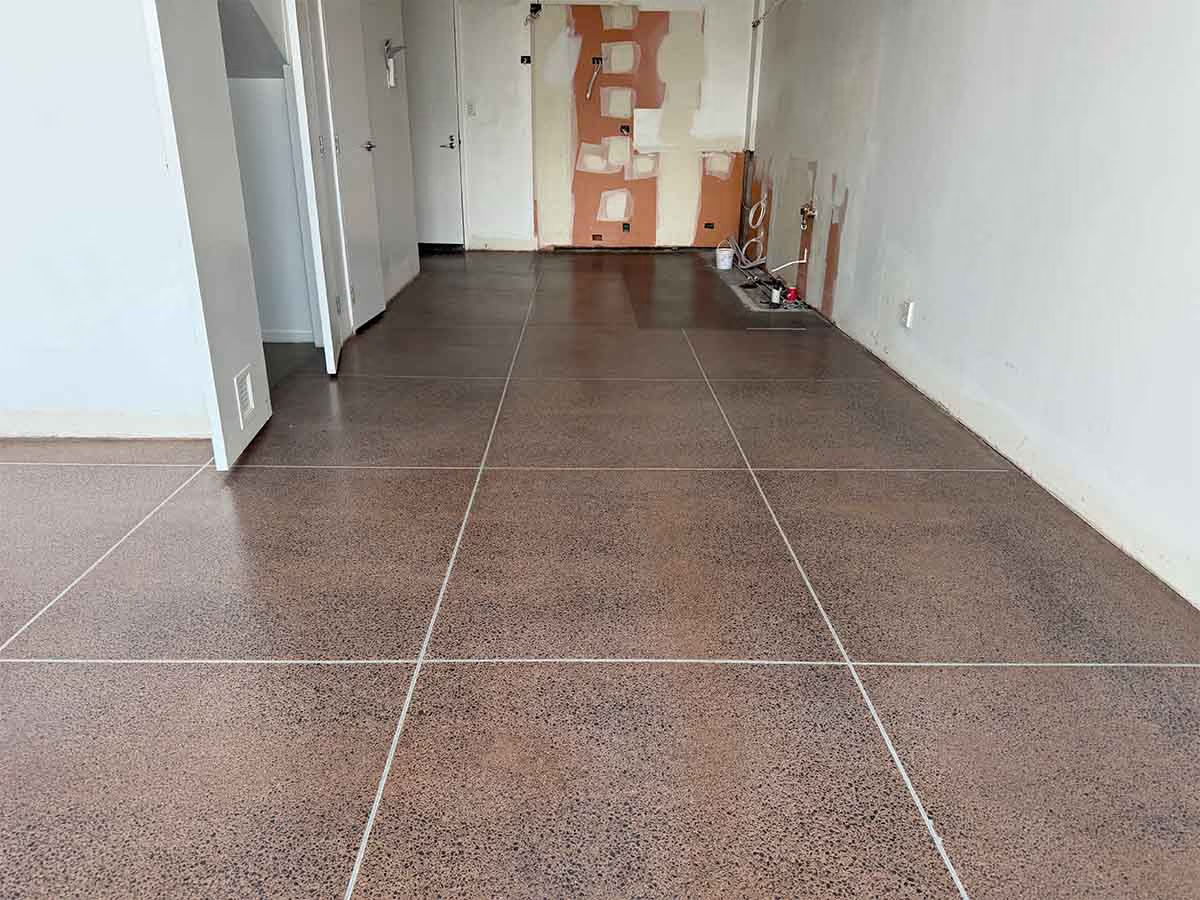
A fine salt-and-pepper fleck. The most popular residential look.
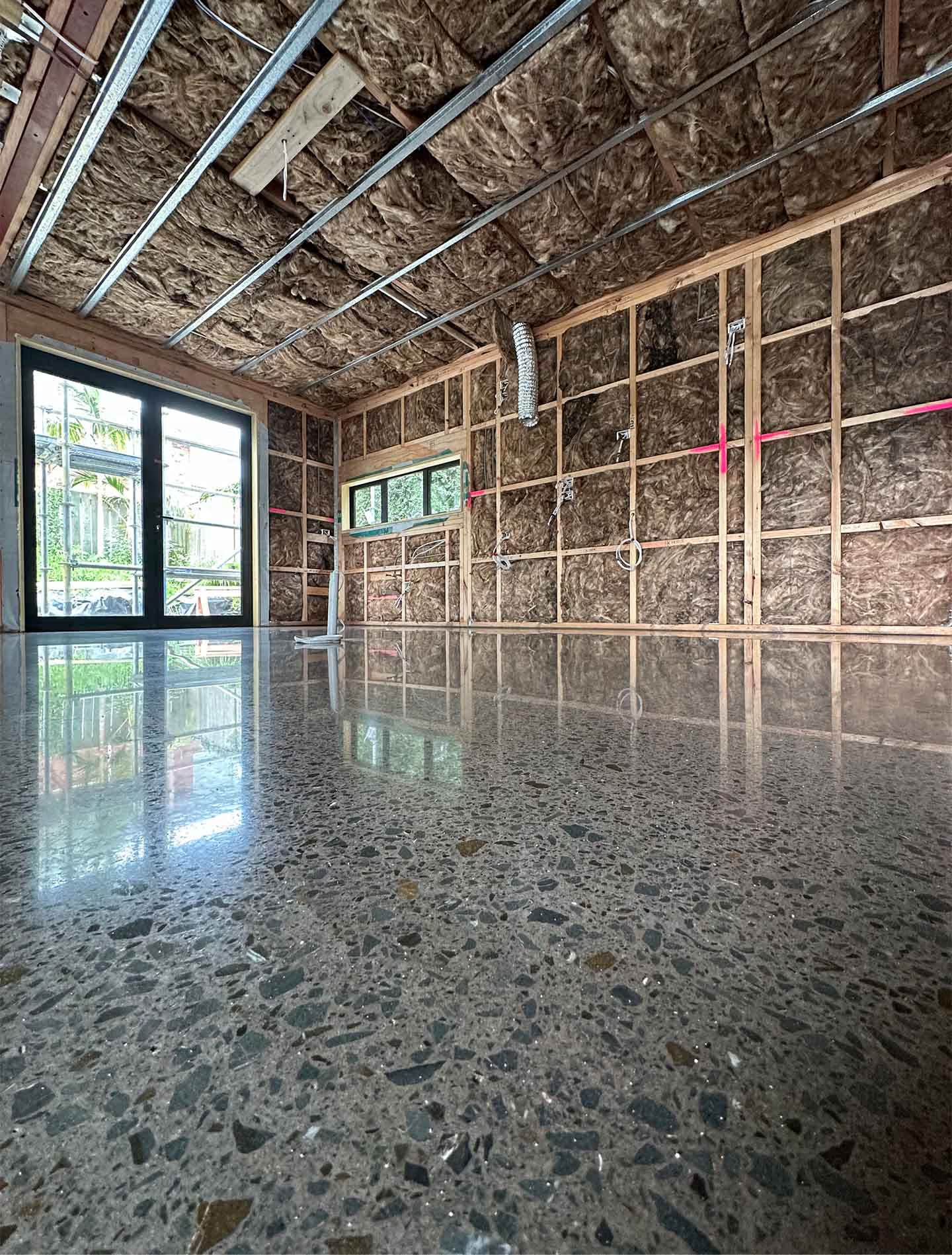
Patches of aggregate scattered naturally across the floor. Organic and characterful.
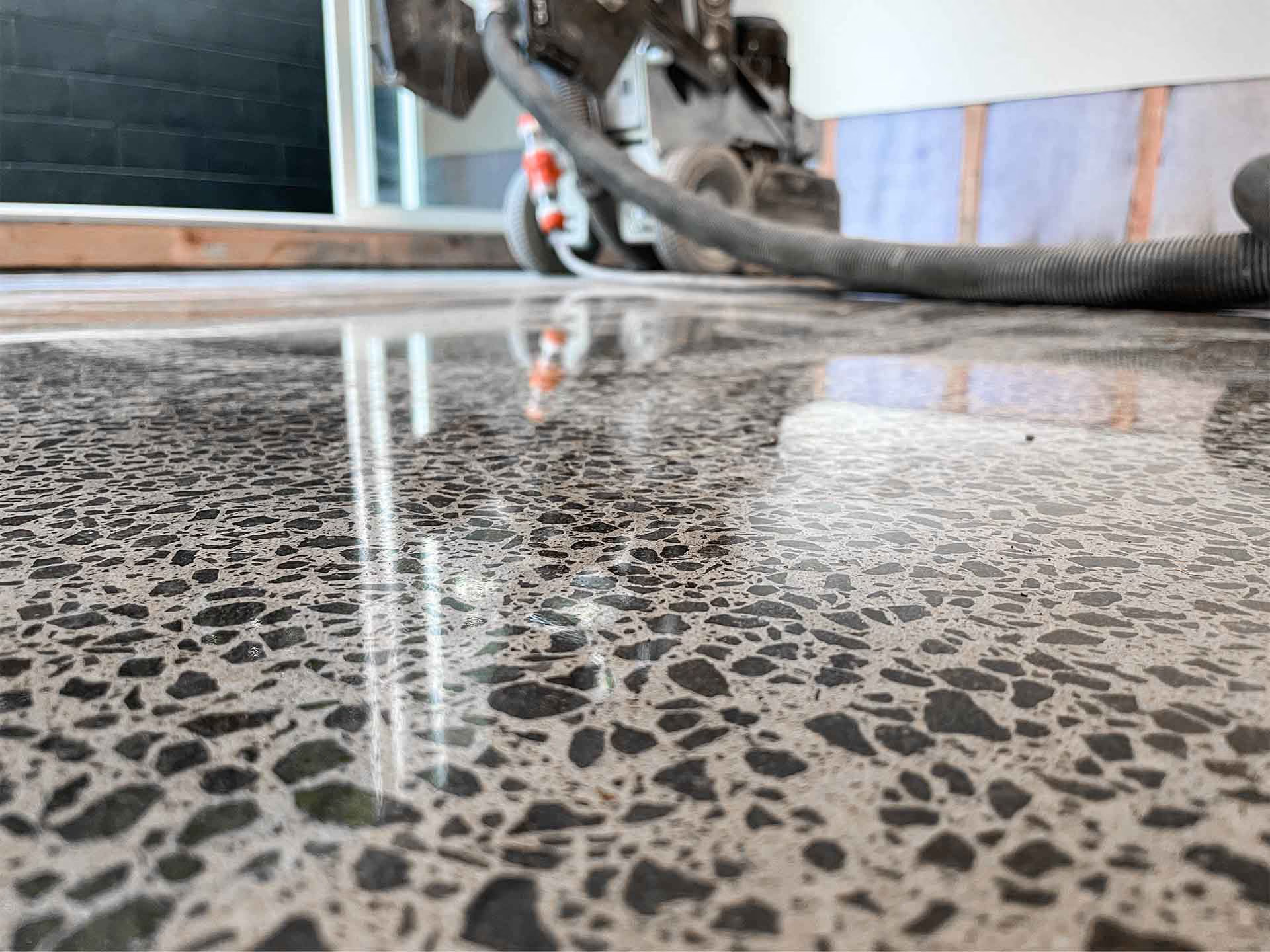
Ground deep to reveal the stone throughout, like terrazzo made from your own slab.


True matte, satin or gloss. Because the finish comes from the sealer, the low-sheen options here are the real thing, not a polish that's been stopped early.
Solvent-based sealers bring out deeper, richer colour in the concrete. Water-based sealers have less odour and dry faster, which suits homes and businesses that are still being used. Jay will recommend the right one for your floor at the assessment.
Non-slip additives can be mixed into the sealer for wet areas and outdoor floors, and enhancing sealers can be used to deepen the colour of the stone.
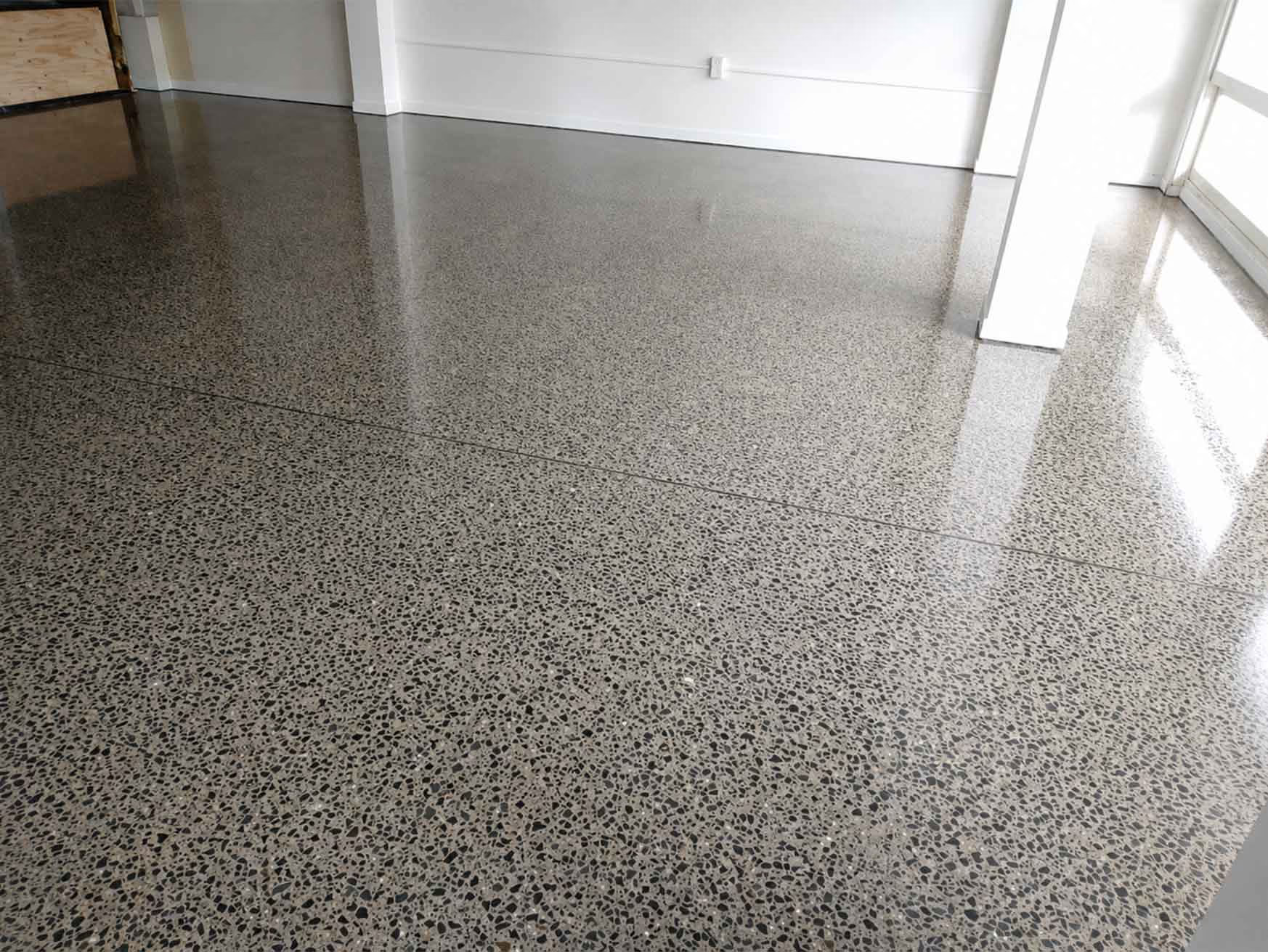
Quick. Most home floors are ground, sealed and ready to walk on within days rather than weeks.
Affordable. The exposed concrete look at the lowest price point of any finish we offer.
Tough. A good sealer over a properly ground floor stands up to garages, workshops and everyday family life.
Handles sun and spills. Sealed floors cope with sunlight, spills, tyres and traffic, inside and out.
Easy to look after. Sweep and mop, and have it resealed every few years. No grout to scrub, no carpet to clean.
Easy to refresh. When the sealer eventually wears down, we recoat it. The grind underneath is permanent, so you're renewing the protective layer, not replacing the floor.
Five steps, usually across a few days, because the sealer can't go on until the floor is properly dry. Here's how it runs.
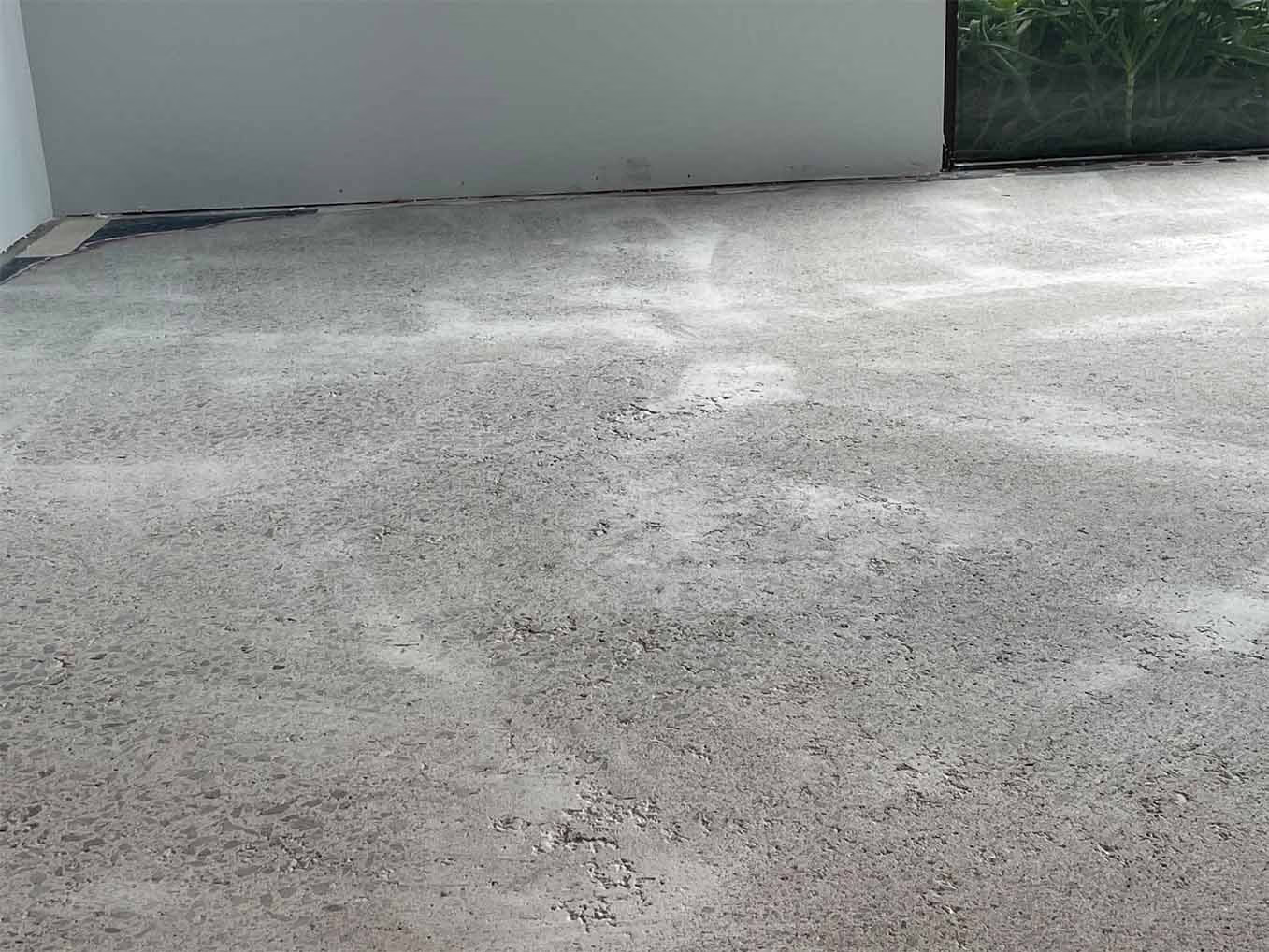
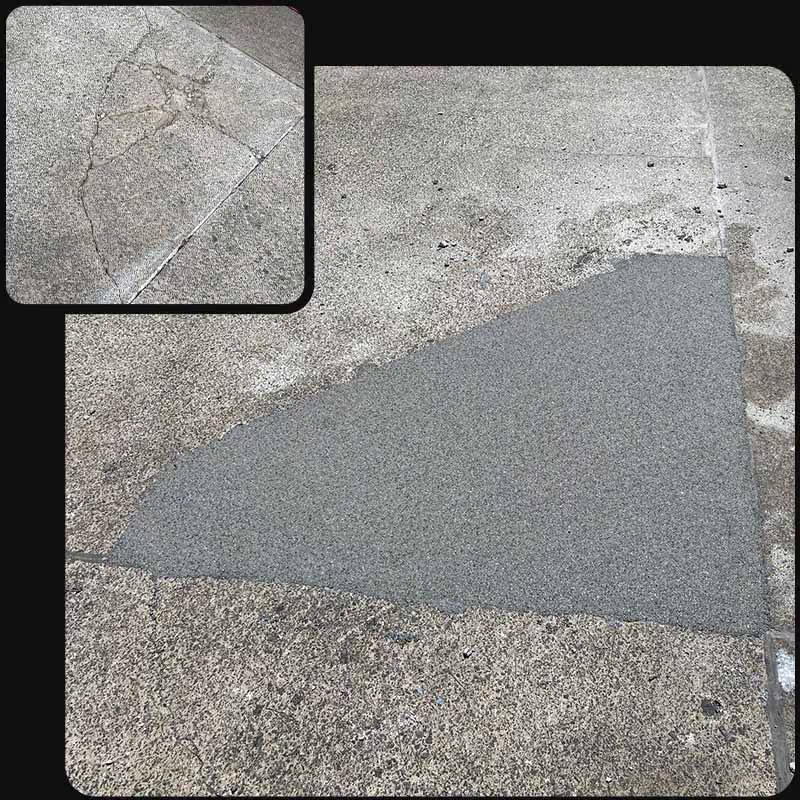
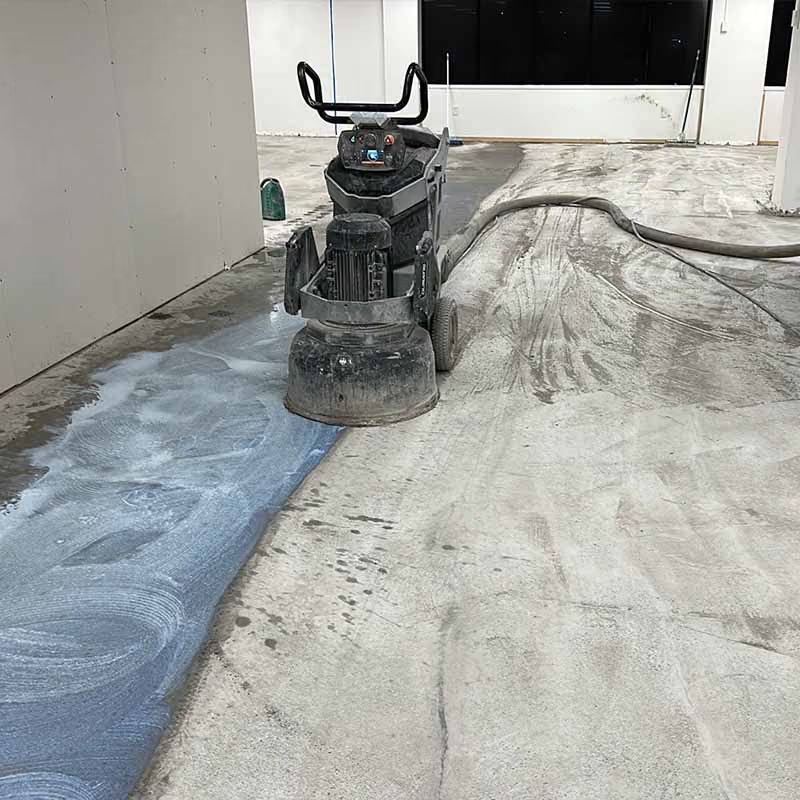
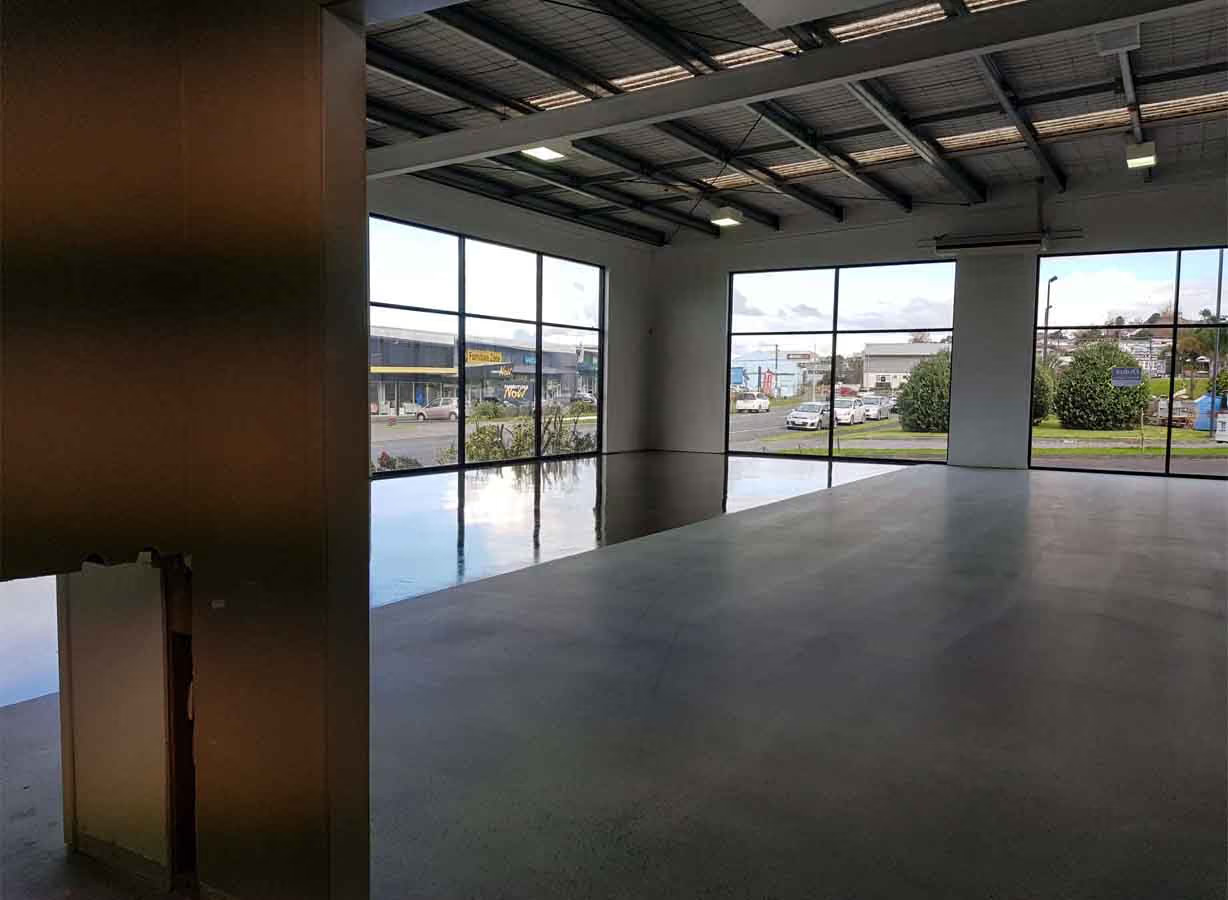
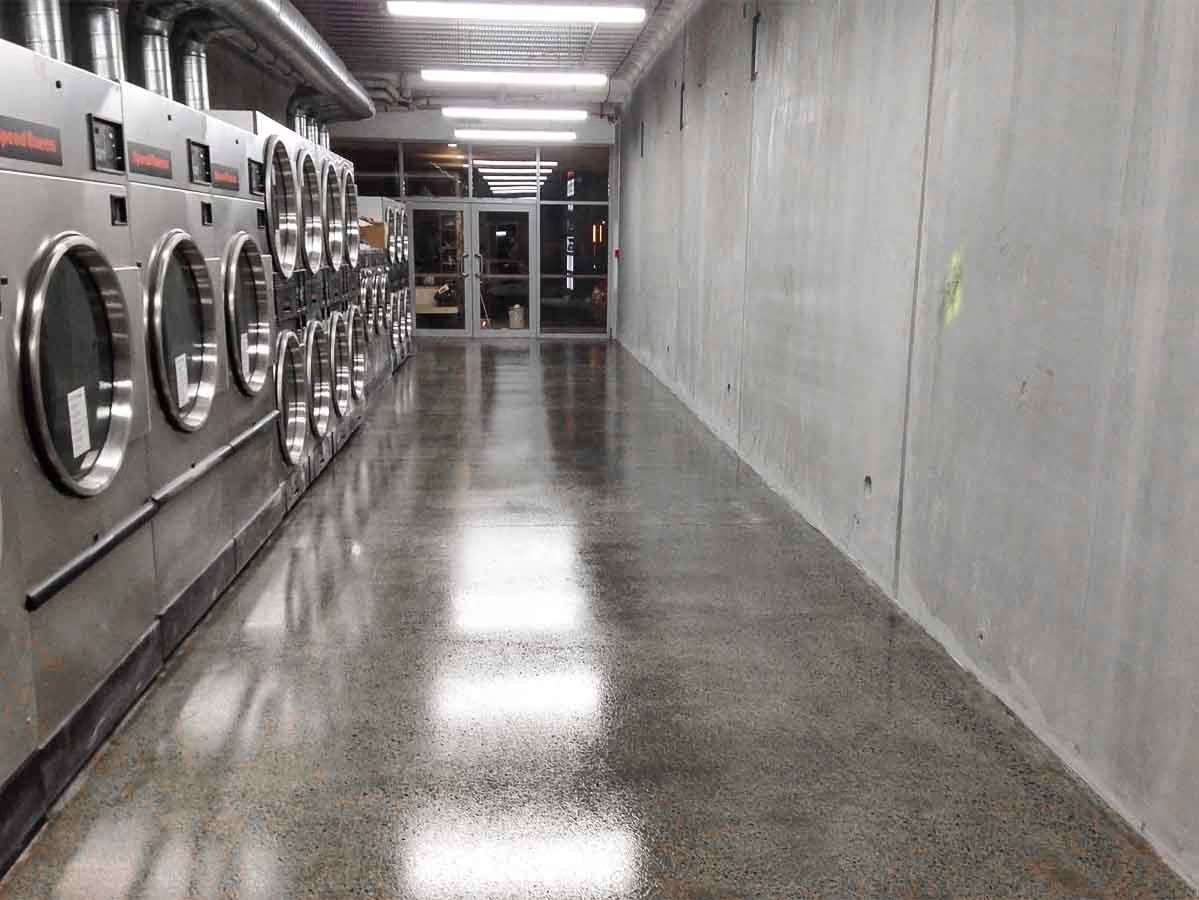
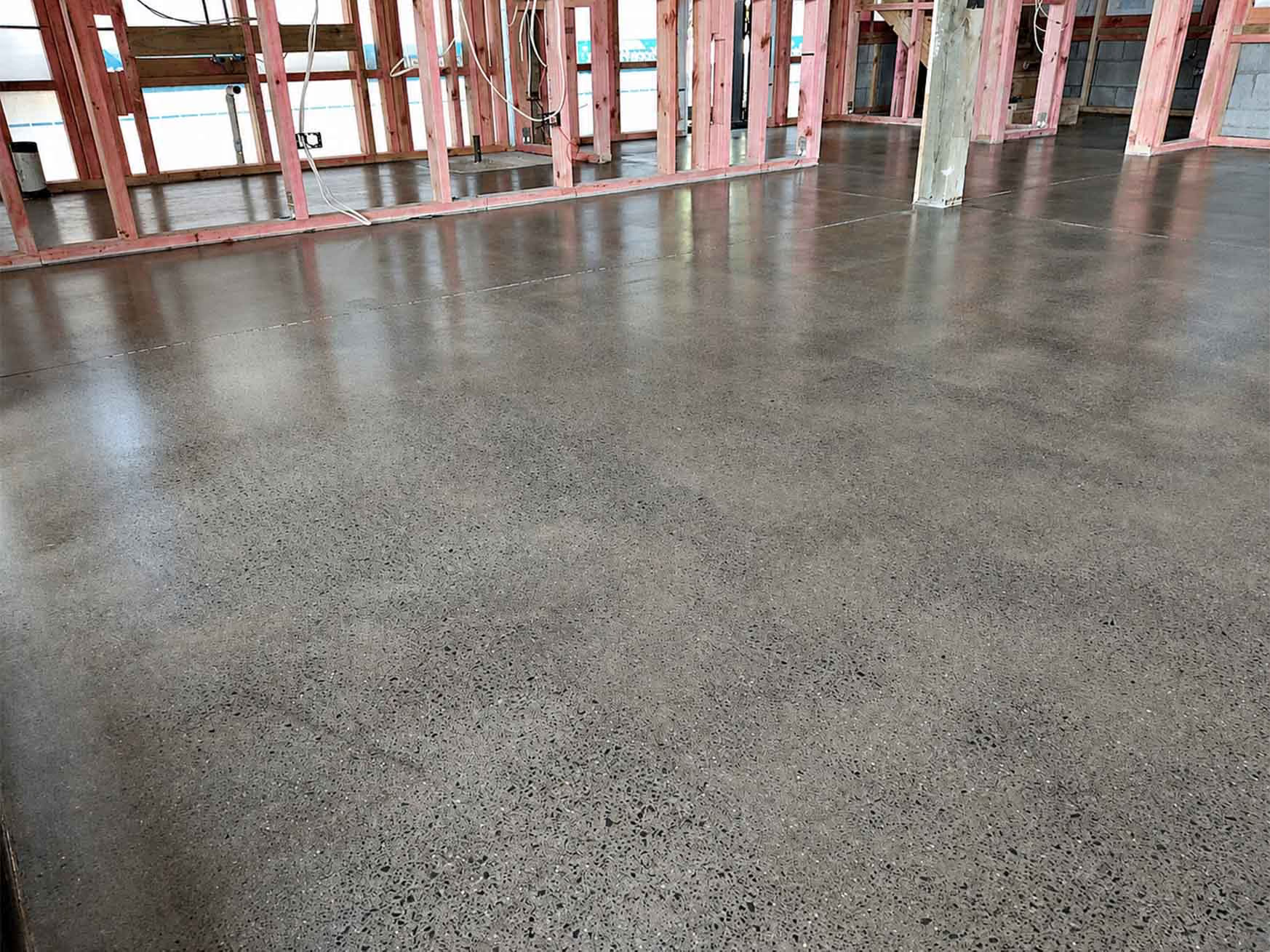
Garage floors that turn a storage space into a room you'd actually use. Patios, paths and outdoor areas that need to handle the sun. Retail, café and hospitality floors on a fitout deadline. Sleepouts and rentals where the numbers have to stack up. And older slabs of every kind that deserve a second life instead of being covered over.
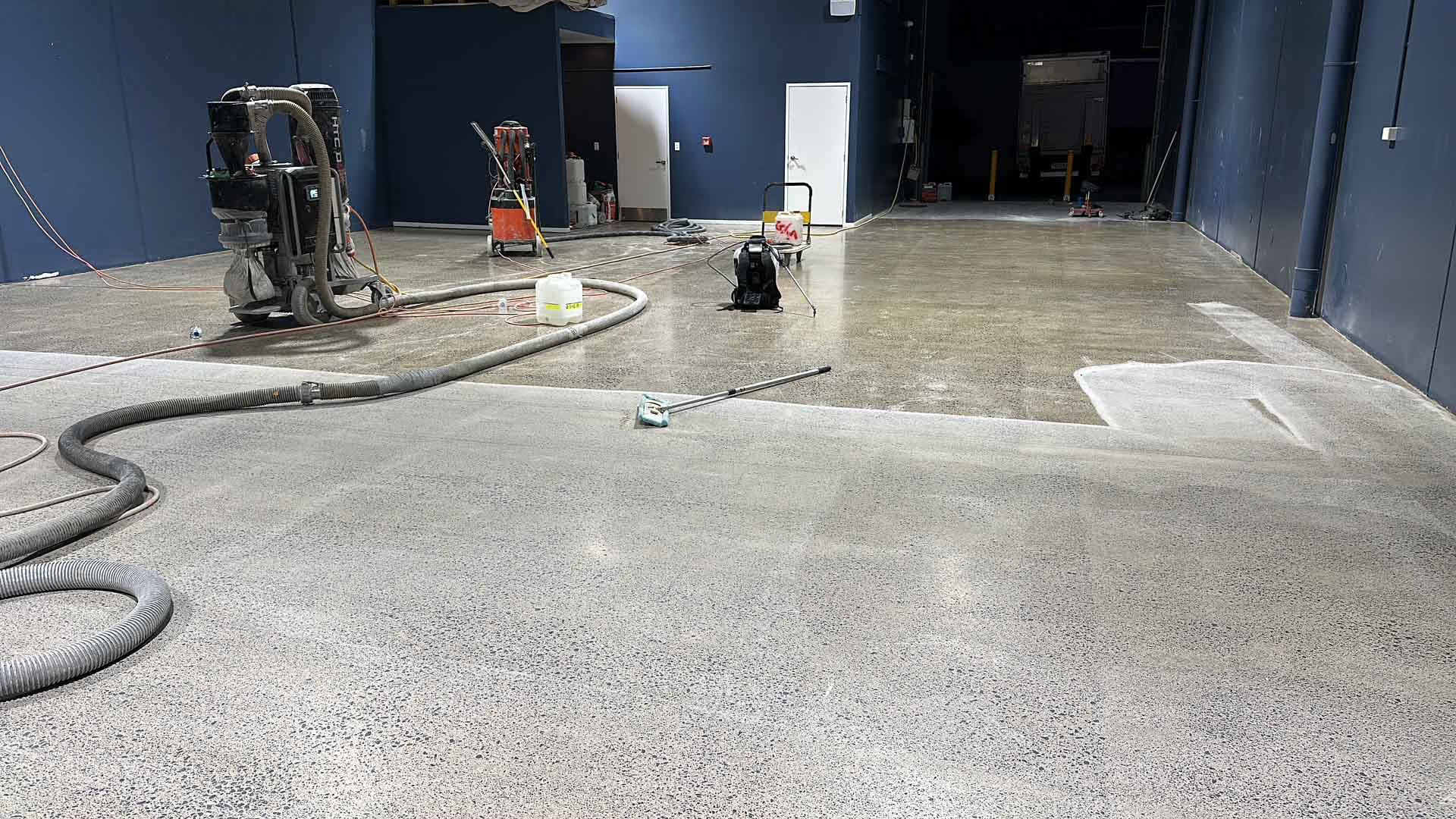
Every grind and seal job carries our workmanship guarantee. The grinding, the preparation and the sealing are done properly, and if they're not, we come back and put it right.
There's one thing we'd rather tell you now than later. A sealer is a protective layer that sits on top of the concrete, and layers like that wear over time. Depending on how much traffic your floor gets, it will need recoating every few years. At handover we'll give you a realistic timeframe for your floor, and our maintenance team can do the recoat when it's due. That's just how sealed floors work, and knowing it up front is the difference between a floor that keeps looking good and one that gets left too long.
Less than a full polish on the same floor. The price depends on the size of the area, the condition of the slab, how deep we grind and which sealer you choose. The free on-site assessment gets you a fixed price rather than a rough estimate.
The grinding is permanent, and a grind and seal floor lasts a long time. The sealer on top is the part that wears. Depending on foot traffic and whether the floor is inside or outside, it may need recoating every three to five years. In between, the floor needs nothing more than sweeping and mopping.
About the same as tiles. For wet areas and outdoor floors we can mix a non-slip additive into the sealer. If you need certified slip resistance, like around a pool or in a public space, our bush hammering service creates a permanent non-slip texture in the concrete itself.
Yes, and outdoors is where this service really earns its keep. Sealers are made to handle sunlight, so patios, paths and entertaining areas suit it well. Polished concrete doesn't belong outside.
Almost certainly. Grind and seal is the usual way to give older concrete a second life, including slabs that aren't strong enough to polish and floors coming out from under carpet, glue or old coatings. Jay will confirm it at the free assessment.
No obligation and no call centre. Jay will look at your slab, tell you how it will come up, and in Auckland you'll have a fixed price within 24 hours of the visit.