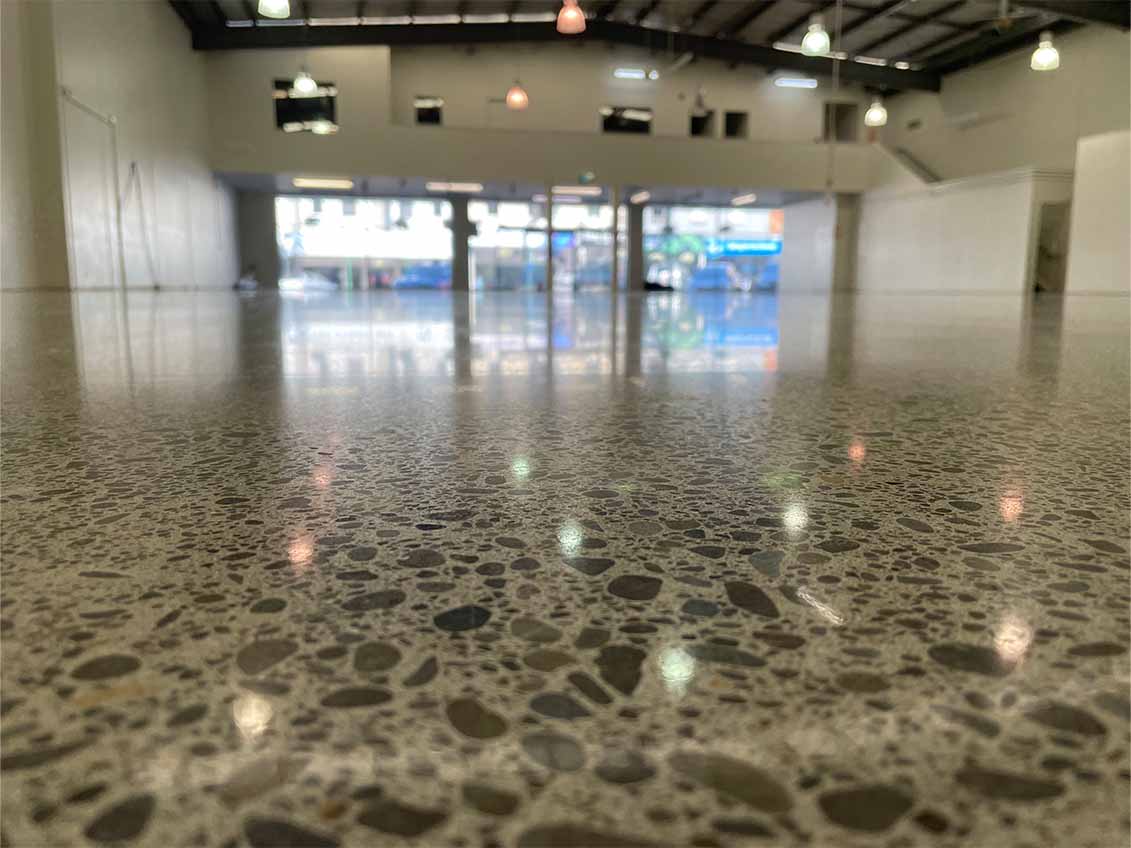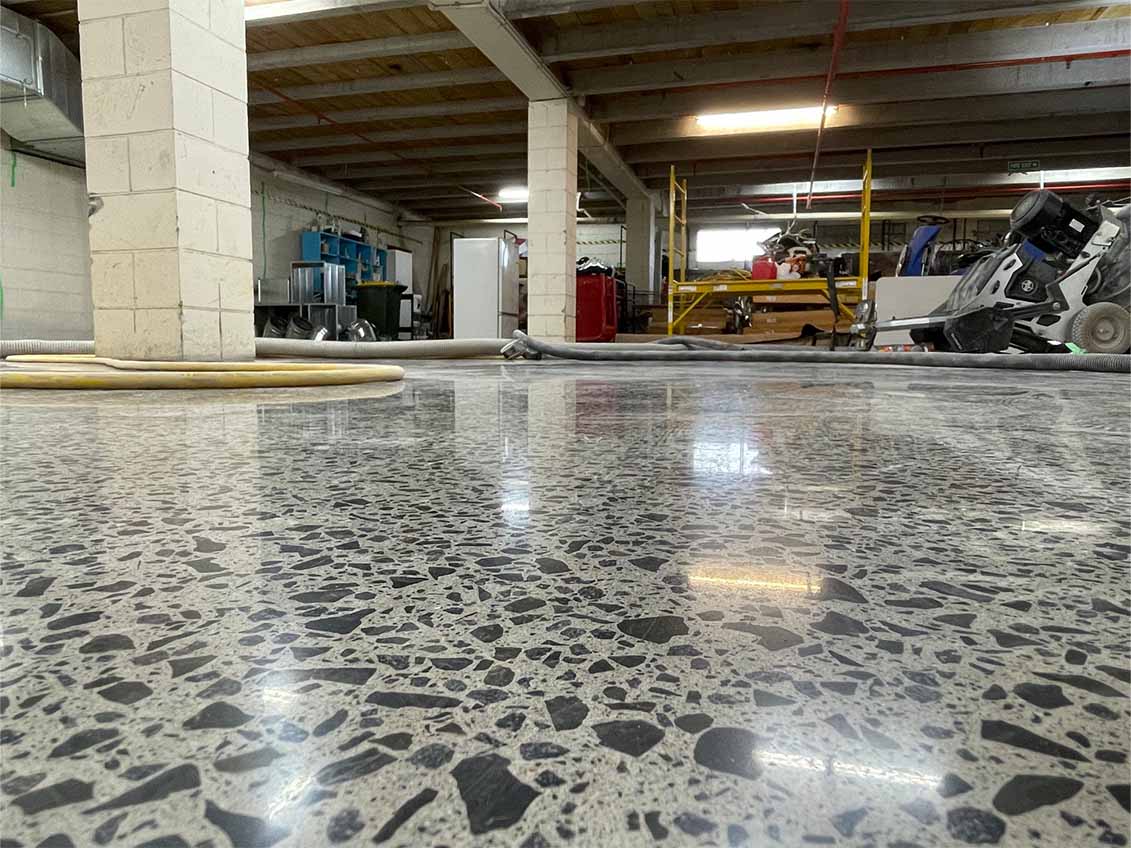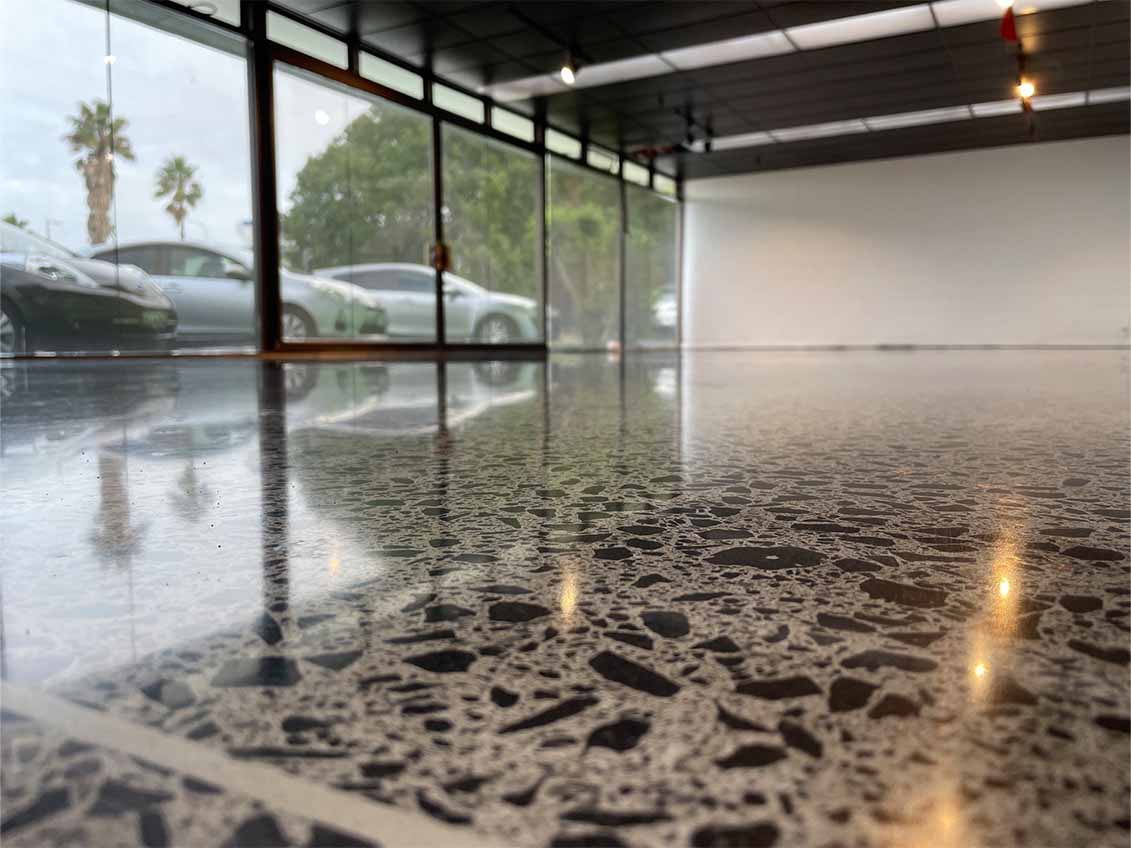
Hard wearing resin coatings for factories, warehouses, workshops, commercial kitchens and garages across Auckland. Easy to clean, resistant to oil and chemicals, and available in a range of colours and finishes. Properly prepared, so it stays stuck.


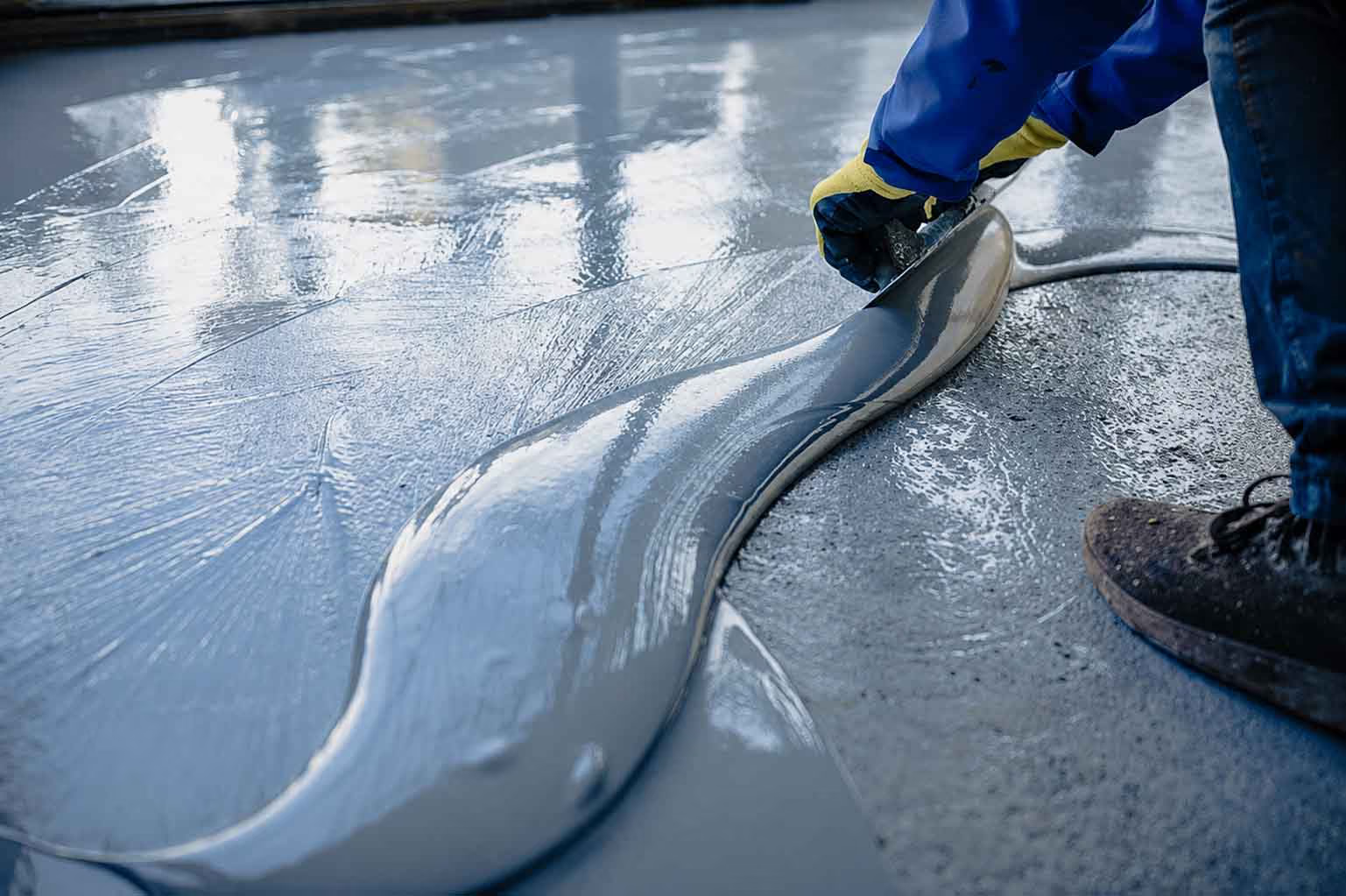
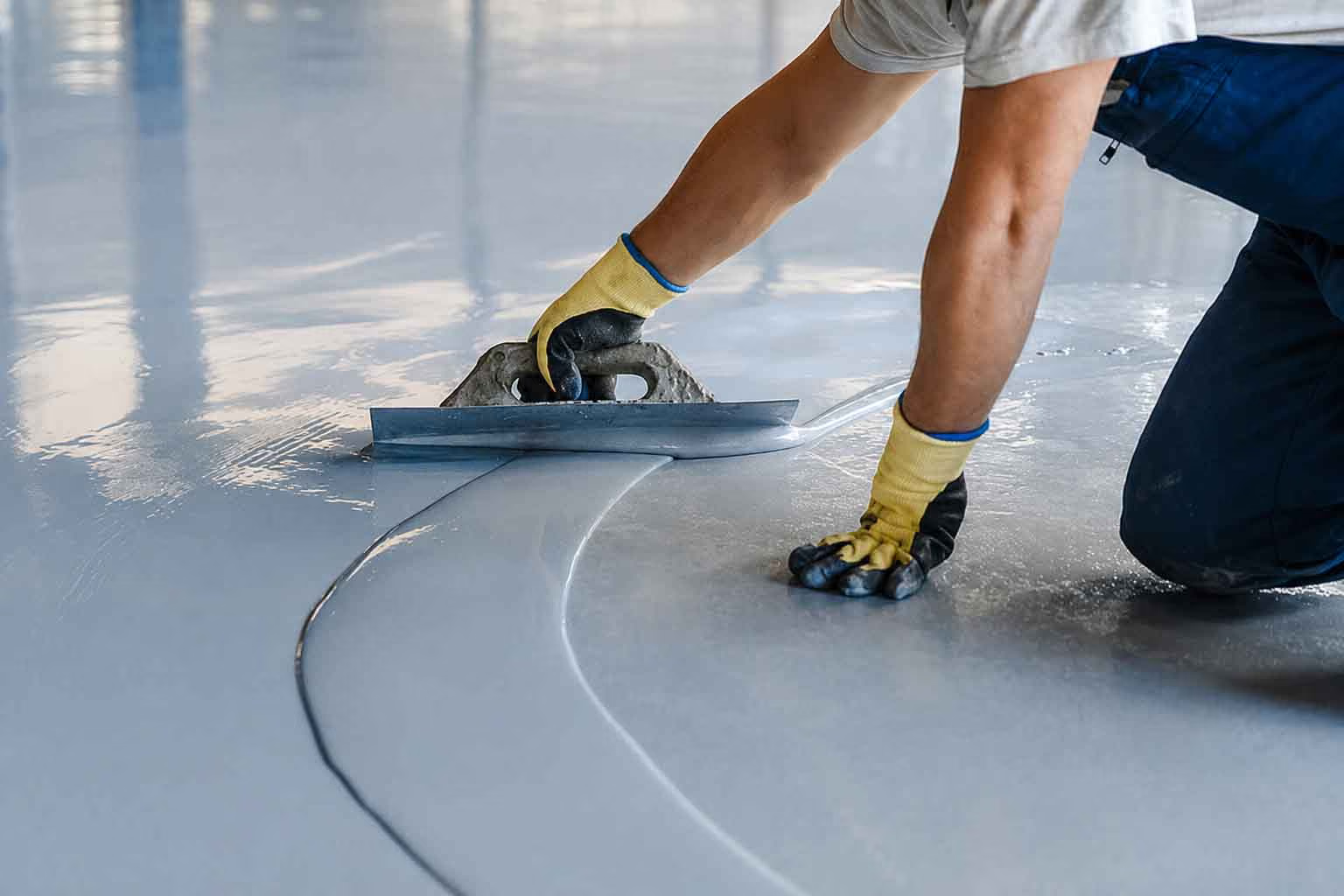
Epoxy is a resin coating that bonds to your concrete and cures into a hard, seamless surface. Unlike paint, which sits on top and eventually peels, a properly applied epoxy floor becomes part of the slab.
That's the important word: properly. Epoxy fails for one reason more than any other, and it isn't the product. It's preparation. If the concrete underneath is dusty, sealed, oily or smooth, the coating has nothing to grip and it will lift, usually in sheets, usually within a couple of years.
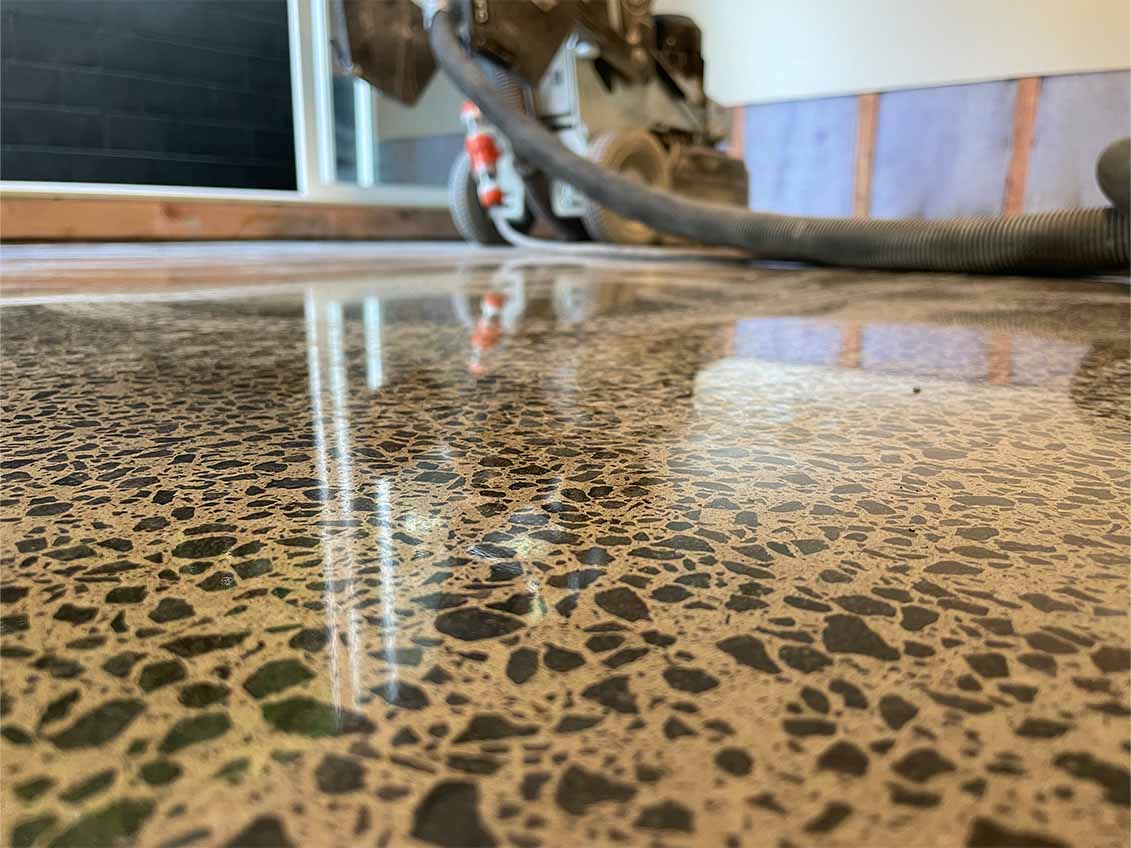
We grind every floor before we coat it. Diamond grinding opens the concrete up and gives it a texture the resin can key into, and it removes whatever was there before. It's the step that costs the most time and the step that decides whether your floor lasts two years or twenty.
If you've had an epoxy floor fail before, that's almost certainly what happened.
Vehicles, forklifts, dropped tools and heavy gear. Epoxy handles industrial use, so a home garage is nothing to it.
Oil, petrol, brake fluid and household chemicals sit on the surface instead of soaking into your concrete.
A seamless surface with no joints or texture to trap dirt. Sweep it, mop it, done.
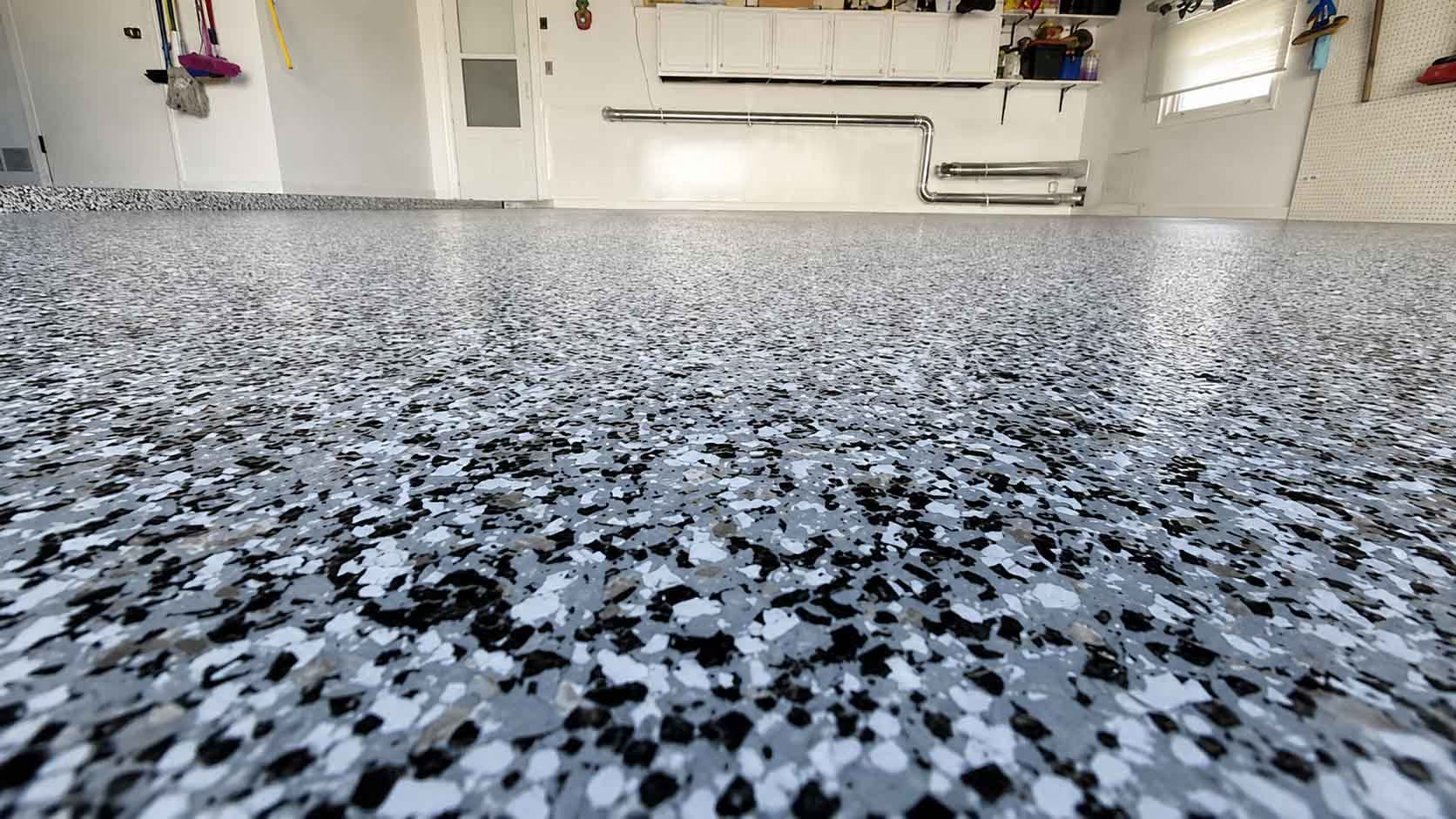
Solid colours, decorative flake blends, clear coats over existing concrete, and matte through to high gloss.
Grip additives can be built into the top coat for wet areas, ramps and work zones.
Light colours reflect a surprising amount of light, which makes garages and warehouses feel bigger and easier to work in.
Solid colour, flake, clear or metallic, each suited to a different kind of space.

A clean, even single colour across the whole floor. The most popular choice for garages and workshops, and the easiest to keep looking tidy.
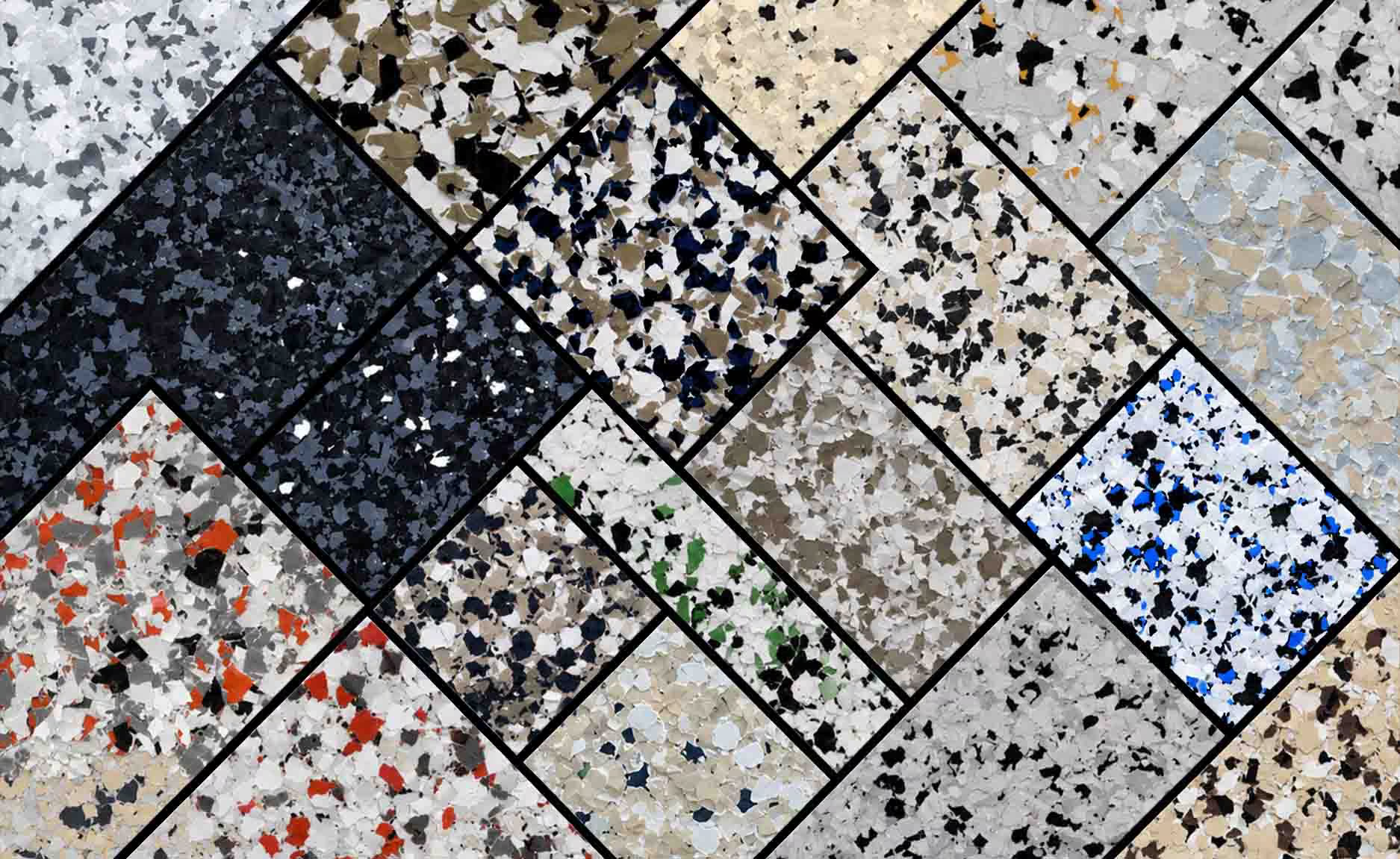
Coloured vinyl flakes broadcast into the coating and sealed under a clear top coat. It looks sharp, hides dirt and minor imperfections well, and adds a bit of texture underfoot. The go-to for home garages that double as usable space.
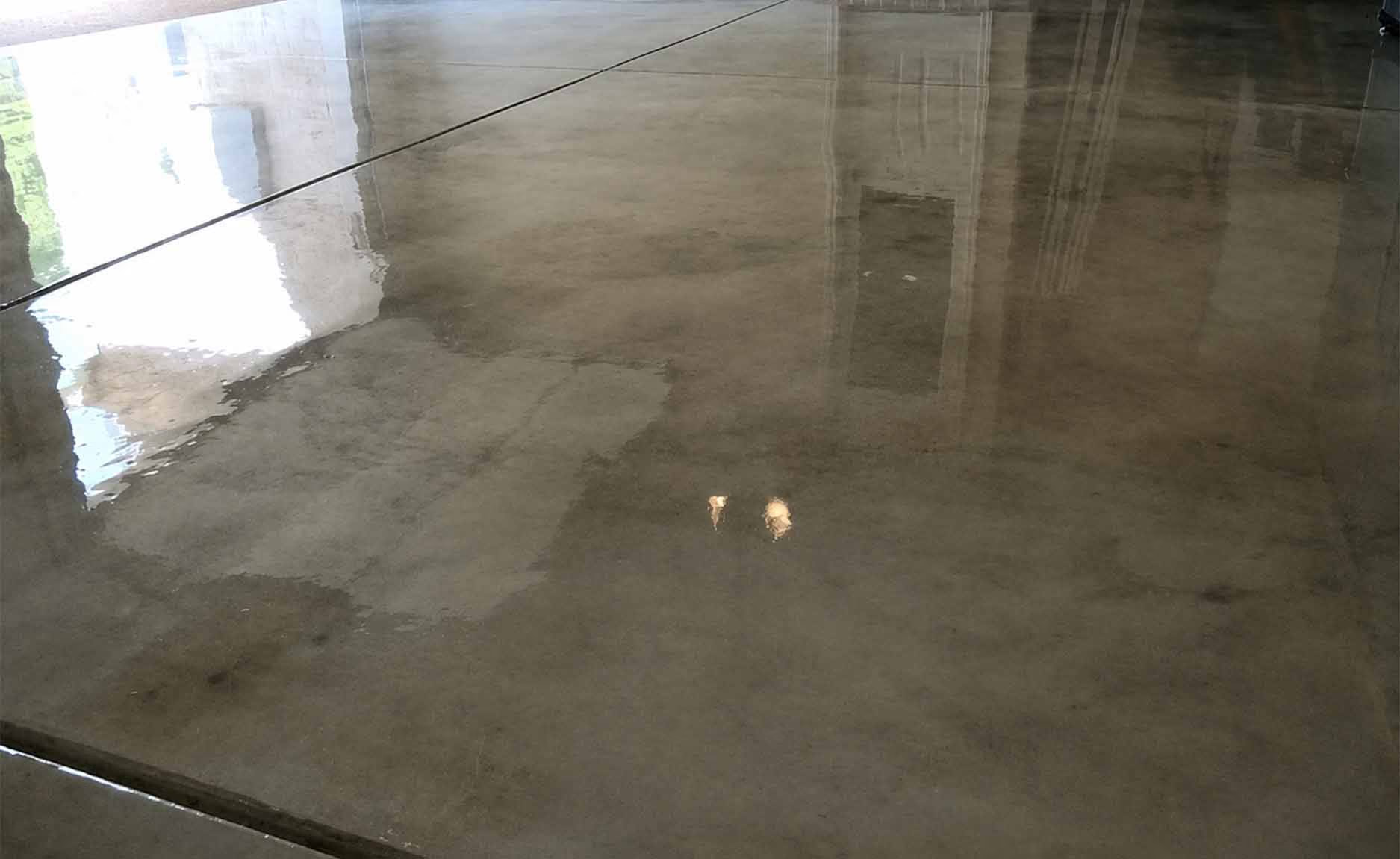
A transparent coating over your existing concrete, protecting it while leaving the concrete looking like concrete.

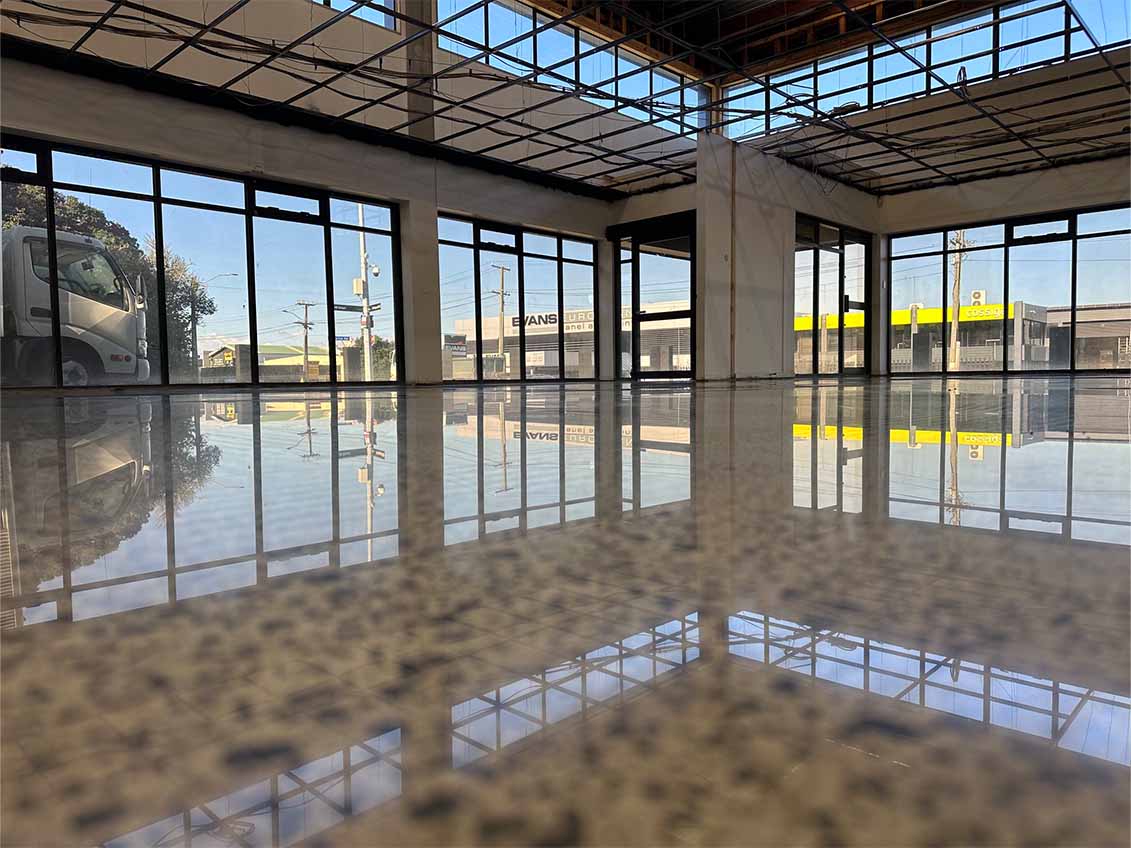
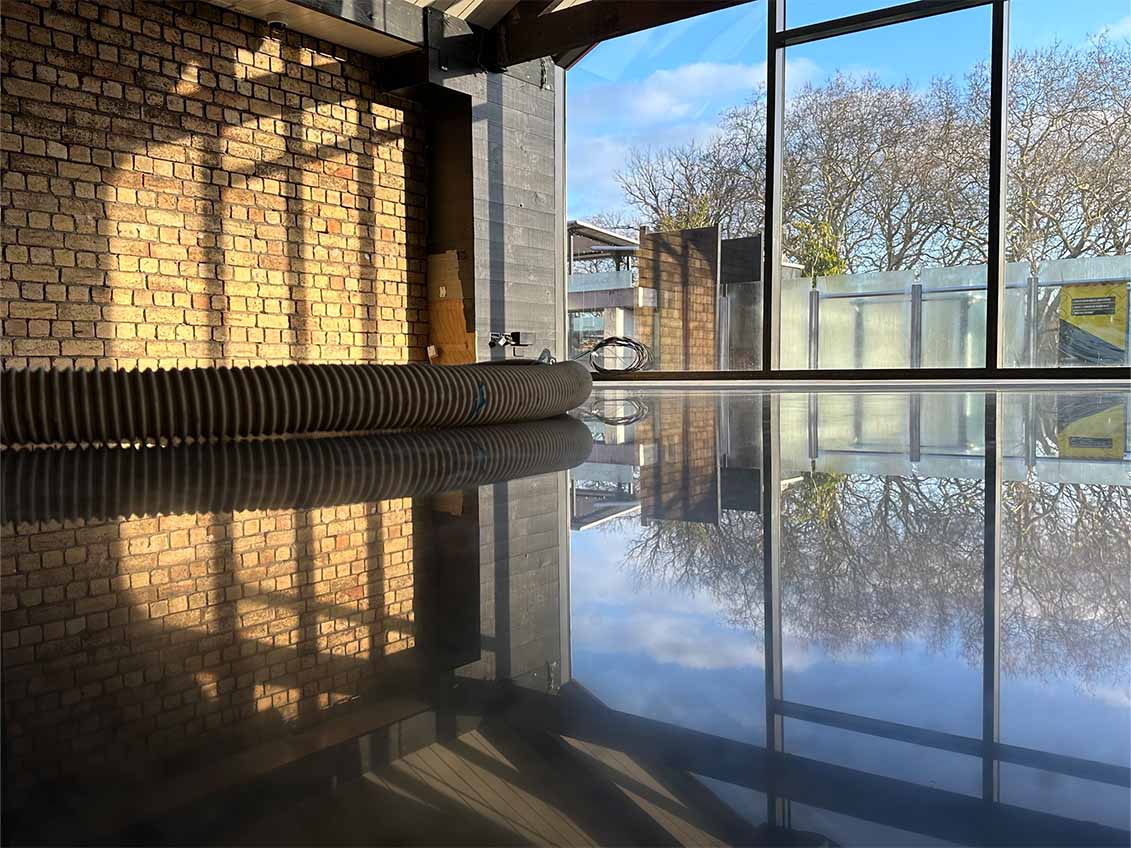
Reflective and marbled effects for showrooms, retail and feature spaces, where the floor is meant to be noticed.


Alongside the look, you choose the sheen: matte, satin or gloss. Gloss is easiest to clean and reflects the most light. Matte hides dust and tyre marks better. Jay will talk you through which suits your space at the assessment.
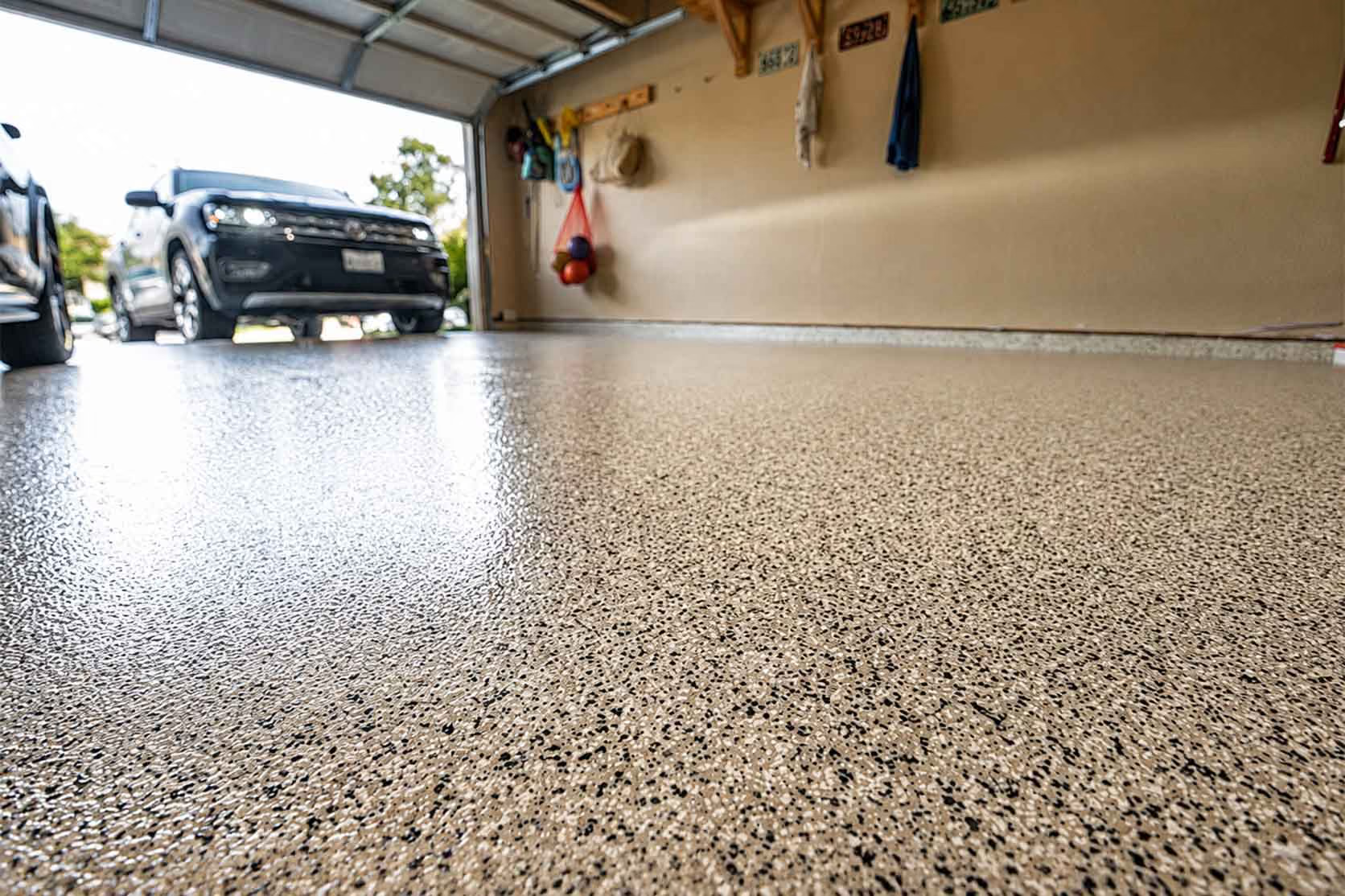
A garage floor is usually bare, dusty concrete that stains, sheds dust into everything stored on it and never really looks clean. Epoxy fixes all three in one go, and it's what turns a garage into a space you actually want to use, whether that's a workshop, a gym, a car space or somewhere the kids can be.
It also handles the things garages throw at floors: hot tyres, dropped spanners, oil drips, and the wheeled toolbox that gets dragged back and forth for a decade.
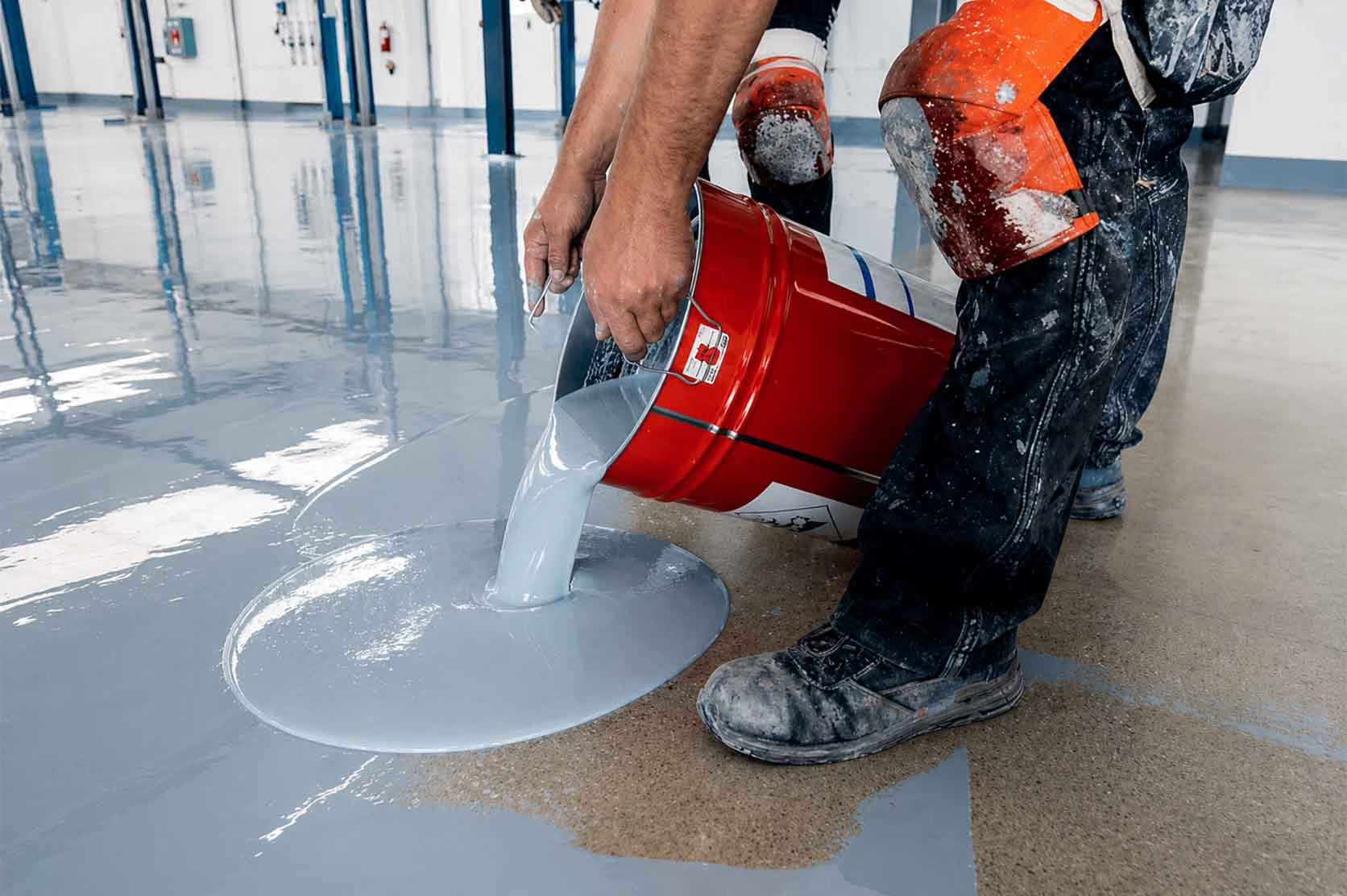
Coatings specified for the loads, traffic and chemicals your operation actually deals with.
Forklift rated floors that stay clean and mark up far less than bare concrete.
Walkways, bays, hazard areas and directional marking laid into the floor rather than taped onto it.
Seamless, washable surfaces with non-slip built in, which is exactly what these spaces need.
Hard wearing floors that still look good, in finishes that suit a customer facing space.
Grip built into the coating for the places where slipping is a genuine risk.
For larger commercial floors, we'll work around your operating hours and stage the job so you can keep running. Tell us your constraints at the quote stage and we'll build the programme around them.
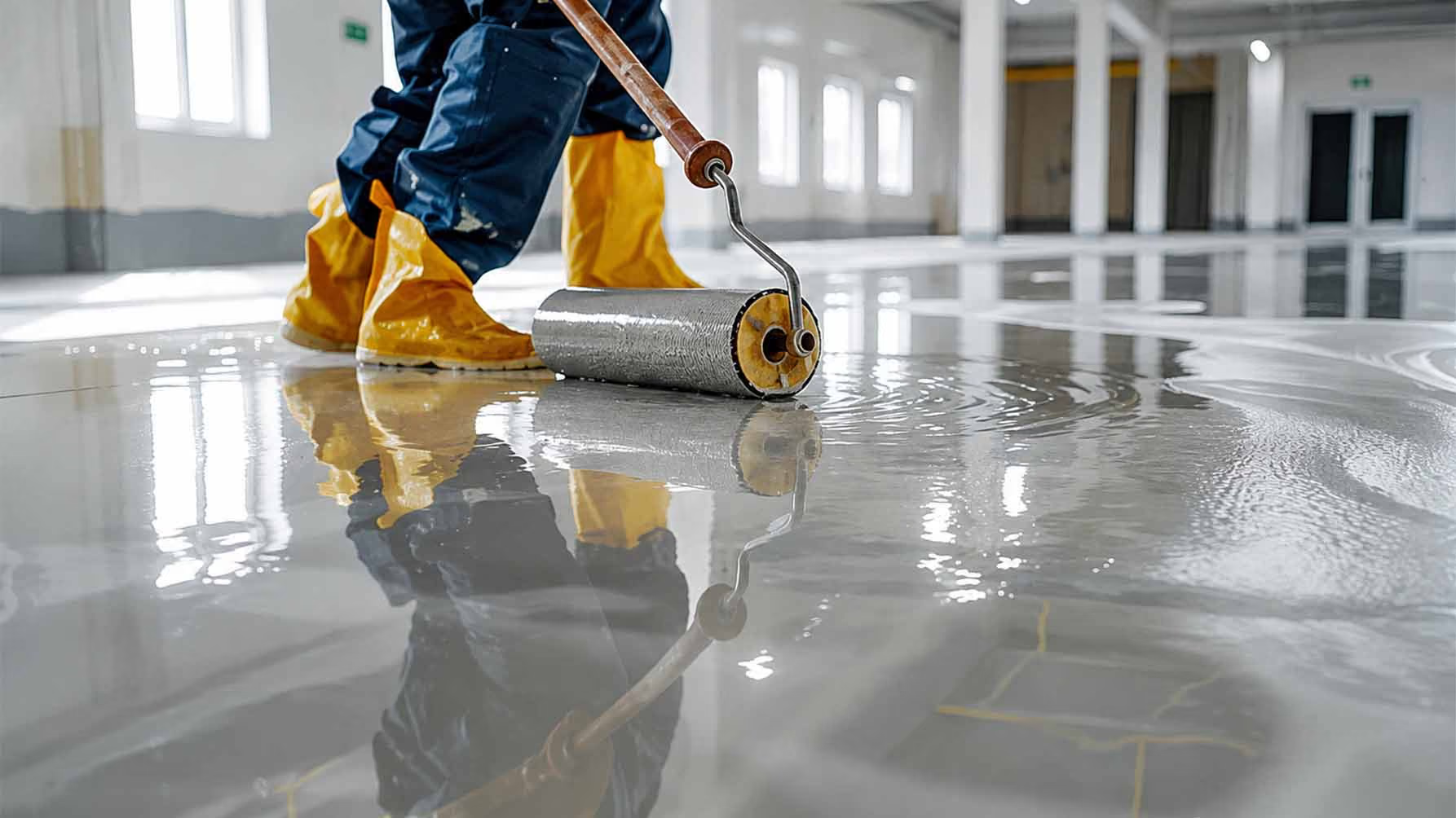
A well prepared, correctly specified epoxy floor in a home garage should give you well over a decade with nothing more than normal cleaning. Commercial and industrial floors depend entirely on what they put up with, and we'll give you a realistic expectation for your specific use rather than a brochure number.
What shortens an epoxy floor's life, in order: poor preparation first and by a long way, then the wrong product for the use, then heavy point loads and dragging steel across it.
Two of those three are our responsibility, and we take them seriously. The third is why we ask what the floor is actually going to be used for before we quote it.
Four steps across a few days, with most of the work happening before any resin comes out of the tin. Here's how it runs.
It depends on the size of the garage, the condition of the slab, how much preparation it needs, and which finish you choose. Flake systems cost more than solid colour because there's an extra coat involved. The free assessment gets you a fixed price.
Paint sits on the surface and peels, usually starting where the car tyres sit. Epoxy is a resin that bonds into ground concrete and cures hard, so it stays put and takes far more abuse. The preparation is also completely different, which is most of why one lasts and the other doesn't.
Not over it, no. The old coating comes off first by grinding. Coating on top of something that's already failing just means both layers lift together later.
Smooth epoxy is slippery wet, the same as any sealed surface. We add grip into the top coat for wet areas, ramps and anywhere it matters. Tell us how the space gets used and we'll specify it accordingly.
Foot traffic is usually fine well before vehicles are. Full cure takes longer than it looks, and driving on it too early is one of the few ways to wreck a new epoxy floor. We give you exact dates at handover.
Yes, a lot. Moisture coming up through concrete can push a coating off from underneath. We check for it during the assessment, and where it's a risk we specify a system that handles it rather than hoping for the best.
Within reason, yes. There's a standard range, and flake blends give you plenty of scope. Bring us a colour you like and we'll tell you honestly how close we can get.
No obligation and no call centre. Jay will look at your slab, tell you what it needs underneath, and in Auckland you'll have a fixed price within 24 hours.