

Not all concrete damage matters. Fine surface cracks in a driveway are extremely common, and plenty of them will sit there for another twenty years doing nothing at all. Filling every hairline crack you can see is usually a waste of money.
Other damage genuinely does need attention, because it lets water in, spreads under traffic, or is a sign of something happening underneath.
As a rough guide, it's worth getting looked at when a crack is wide enough to catch a fingernail or has a height difference across it, when concrete is flaking or breaking away in pieces, when edges are crumbling, when water is disappearing into it, or when the damage is visibly getting worse.
We'd rather tell you a crack is fine and cost ourselves a job than sell you a repair you didn't need. That's the whole point of a free assessment.
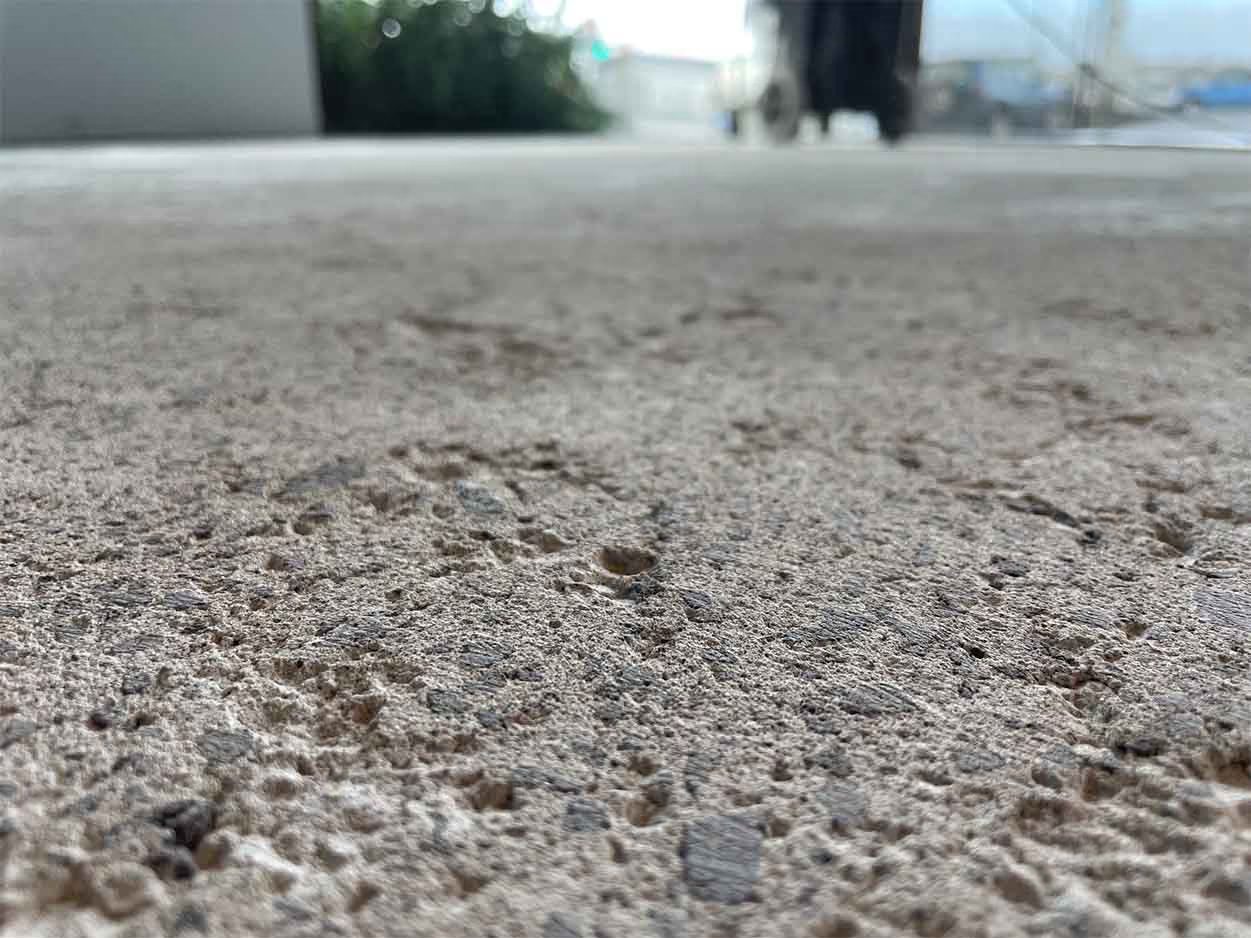
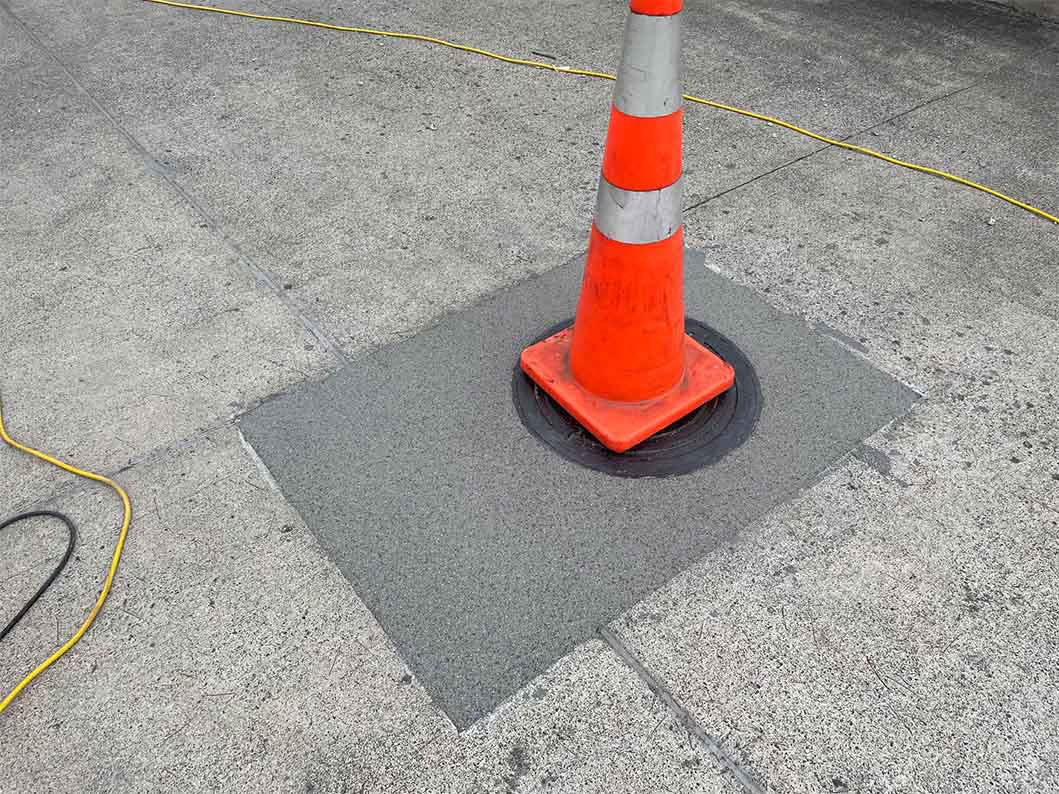
From hairline surface cracks through to wider structural cracks, cut out and filled with a repair suited to the movement in the slab.
Where the surface breaks away in pieces or flakes off in layers, usually from water, frost or reinforcing too close to the surface.
Slab edges, step nosings and corners that have broken away under traffic or impact.
Small holes and craters across the surface, common on older or poorly finished slabs.
Bolt holes, tack strip damage, and holes left behind by removed machinery or fittings.
Slabs with a soft, sandy top layer that never cured properly. Usually ground back rather than filled.
Joints are a separate job with a different fix. If the damage runs along one of the straight lines cut into your slab, that's a joint, and it's covered on its own page.
Most failed concrete repairs fail for the same reason: someone filled the damage without removing what was already breaking down. The filler bonds to loose material, the loose material lets go, and the repair pops out taking a bit more concrete with it.
We do it the longer way. Damaged concrete gets cut back until we reach sound material, the area is prepared so the repair product can actually bond, and then the repair is built up and finished flush with the surrounding floor.
For cracks, the approach depends on whether the crack is still moving. A stable crack can be filled rigidly. A crack that's still opening and closing needs a flexible repair, or it will simply crack again alongside the old one. Working out which you've got is part of the assessment.
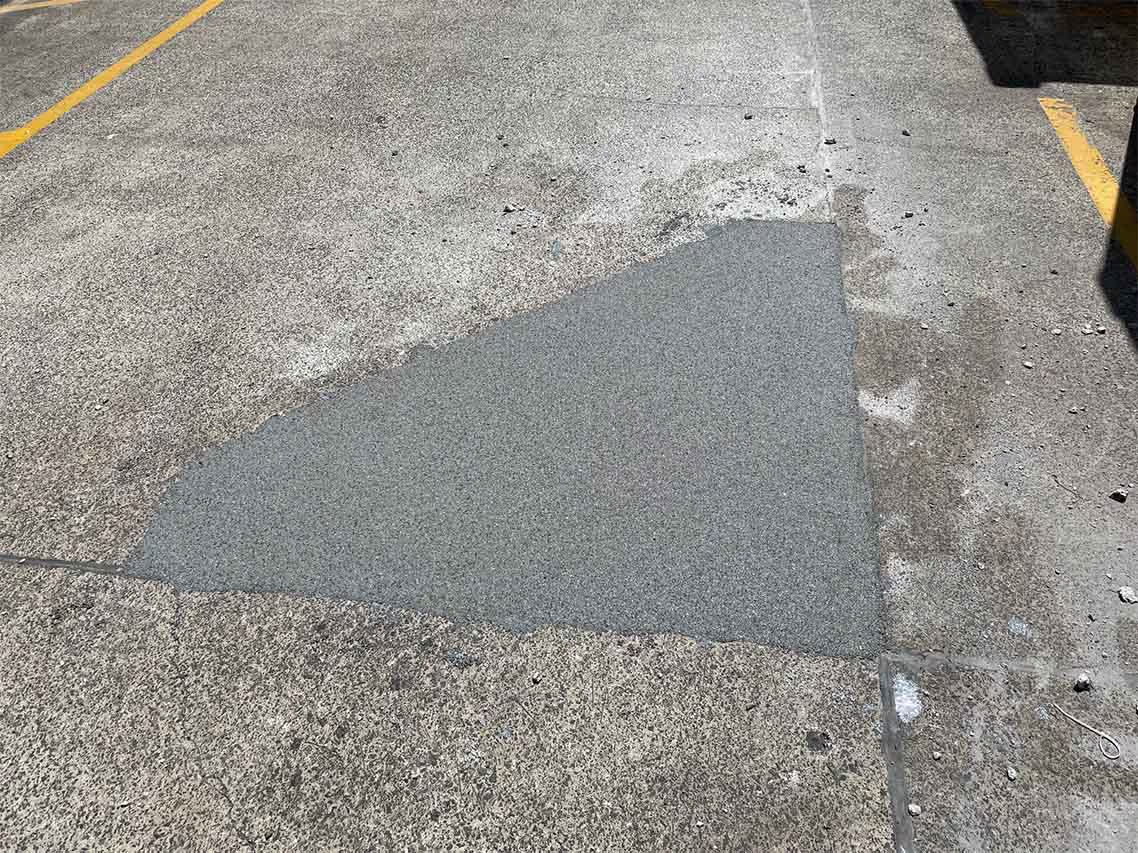
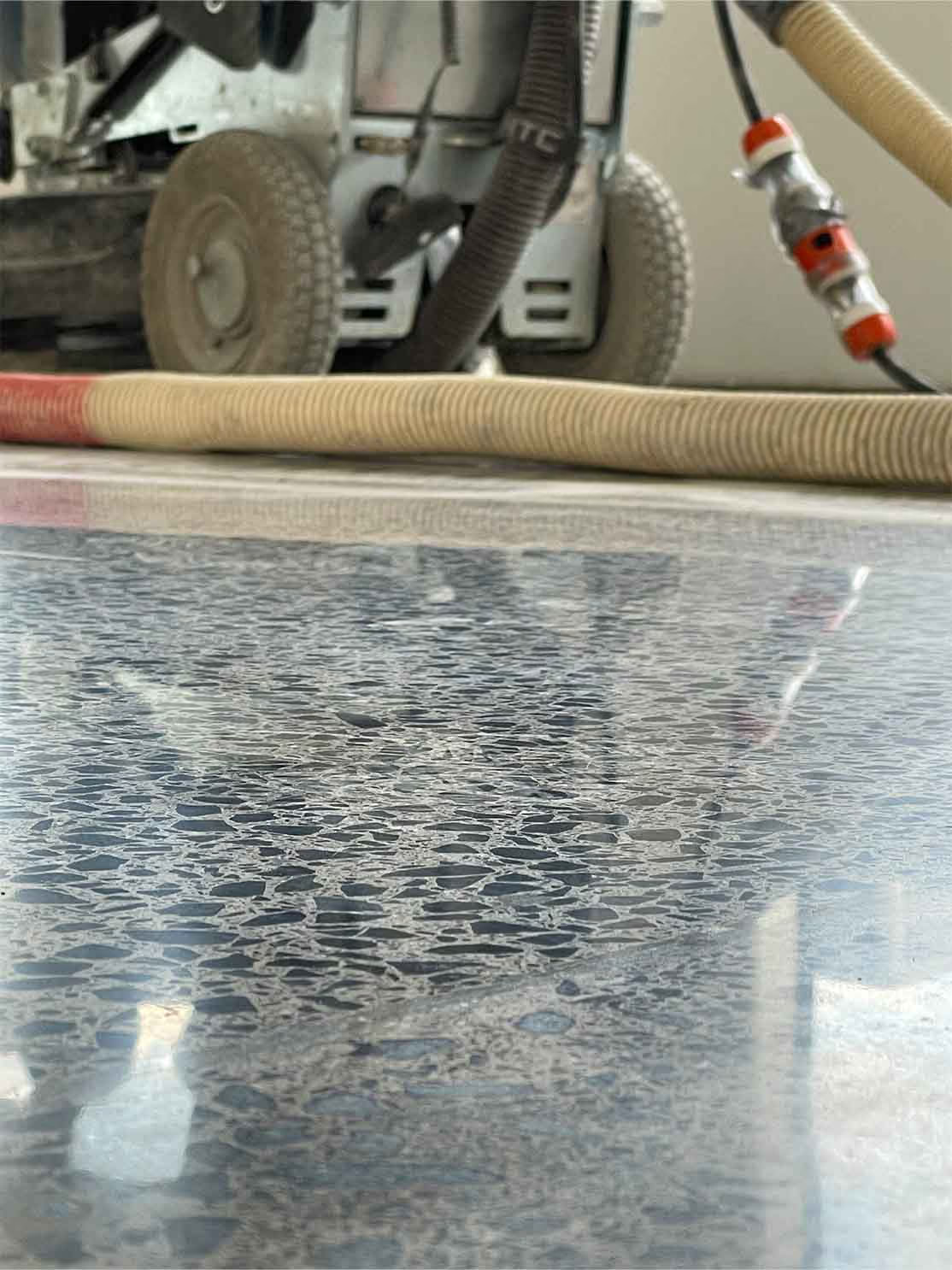
Where the surface is weak, pitted or rain damaged across a whole area, grinding back to sound concrete is usually better and cheaper than dozens of individual patches.
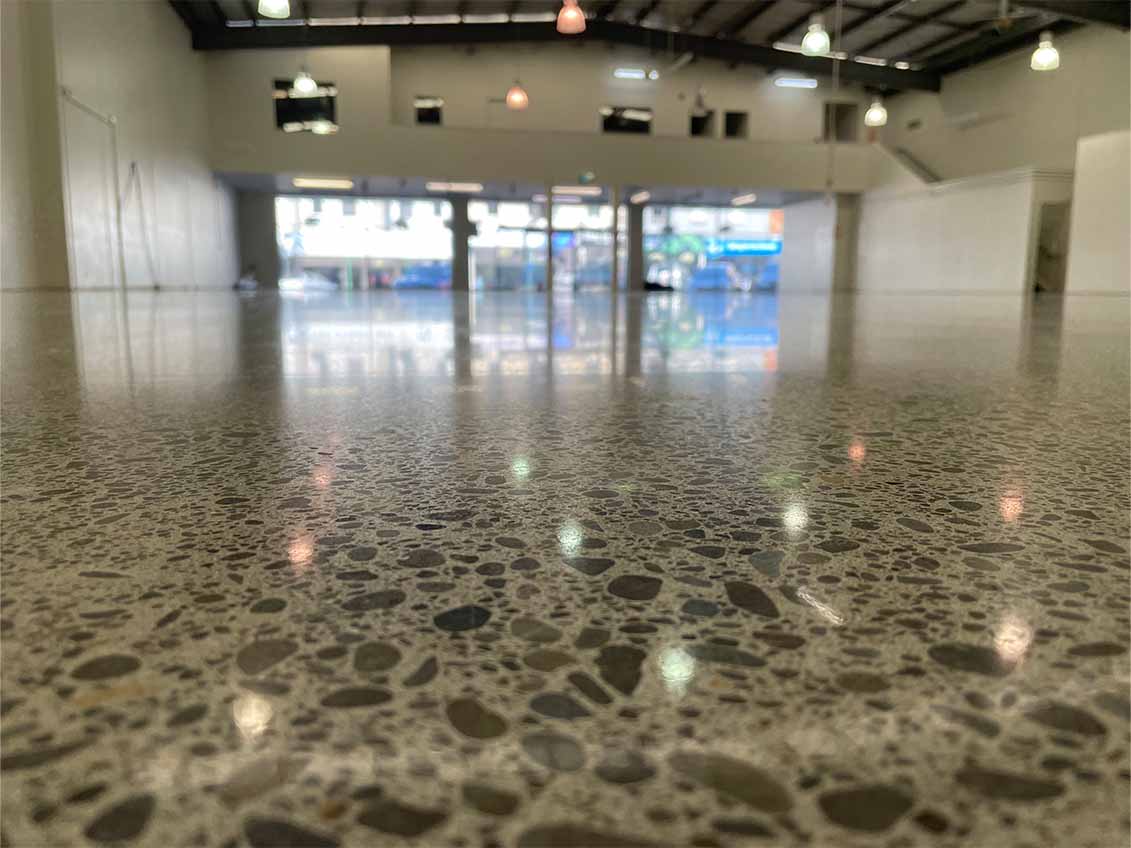
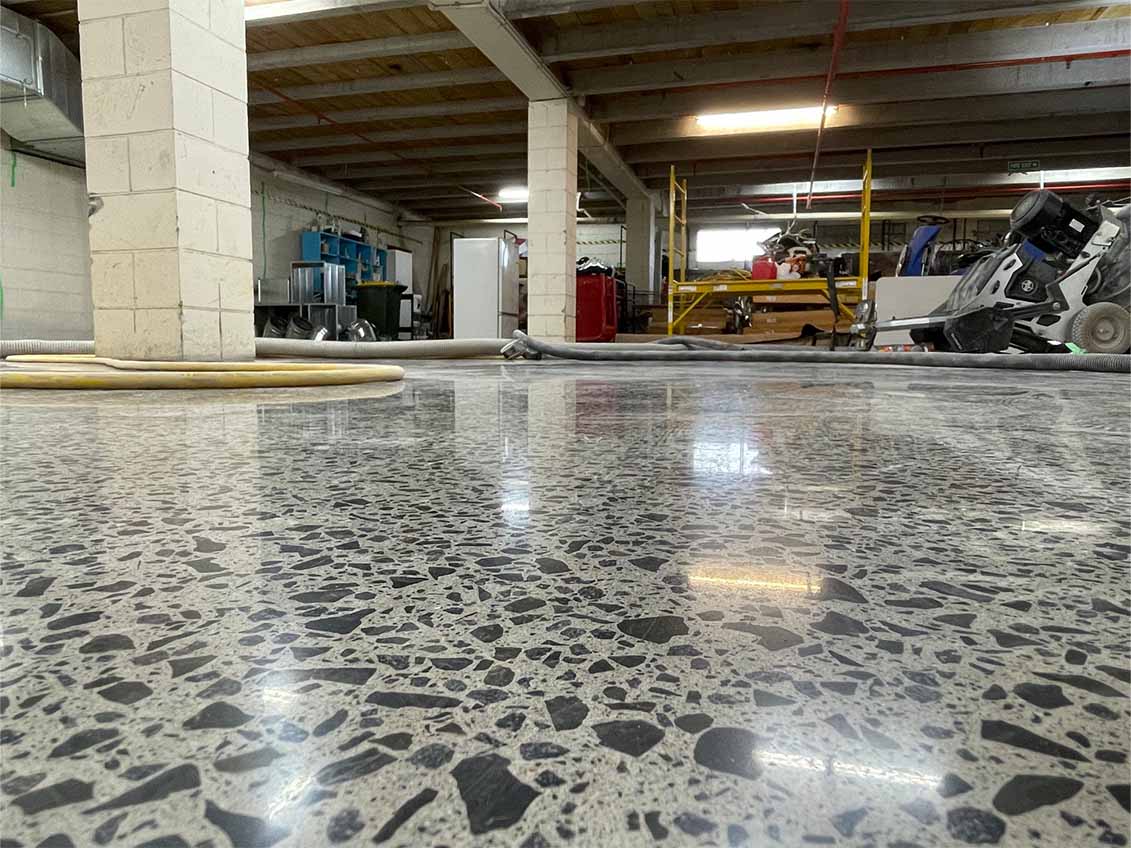
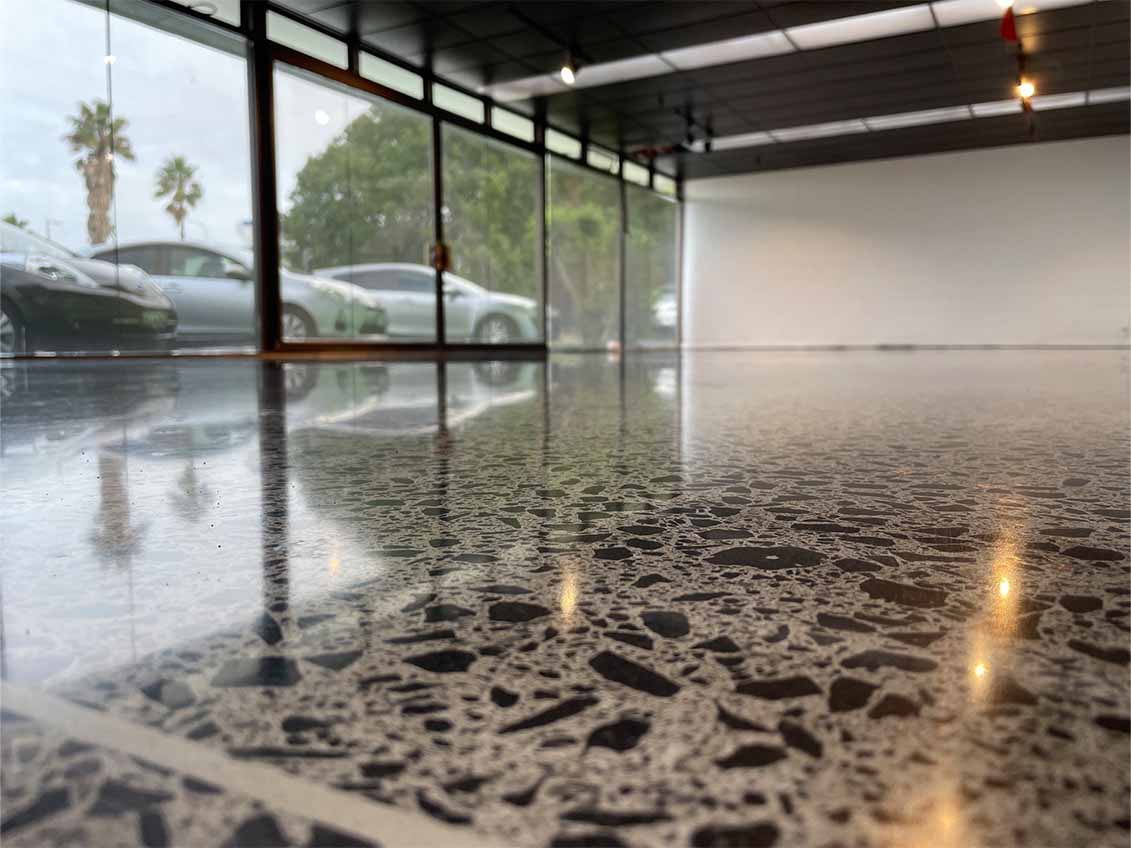
Where a floor has widespread cosmetic damage but is structurally sound, a grind and seal or polish often deals with it as part of the job, and you end up with a finished floor rather than a patched one.
Occasionally a slab is far enough gone that repairing it is throwing money at it. It's rare, and we'll say so plainly if that's what we find. We don't pour new slabs ourselves, so we've no reason to tell you that unless it's true.
Sometimes concrete is just old and marked and perfectly fine.
Most of our repair work happens as part of a bigger job. Before a floor gets polished, sealed or coated, anything broken in it has to be dealt with, because a coating over a crack is still a crack and a polish across a hole just makes a very shiny hole.
Repairs done ahead of a finish need extra care, particularly with colour. A crack filled with the wrong product shows up clearly once a floor is polished. We colour match repairs where the finish will reveal them and we'll be upfront about how visible a repair is likely to be, because a repaired floor is a repaired floor, and it's better to know that before we start than to be surprised at handover.
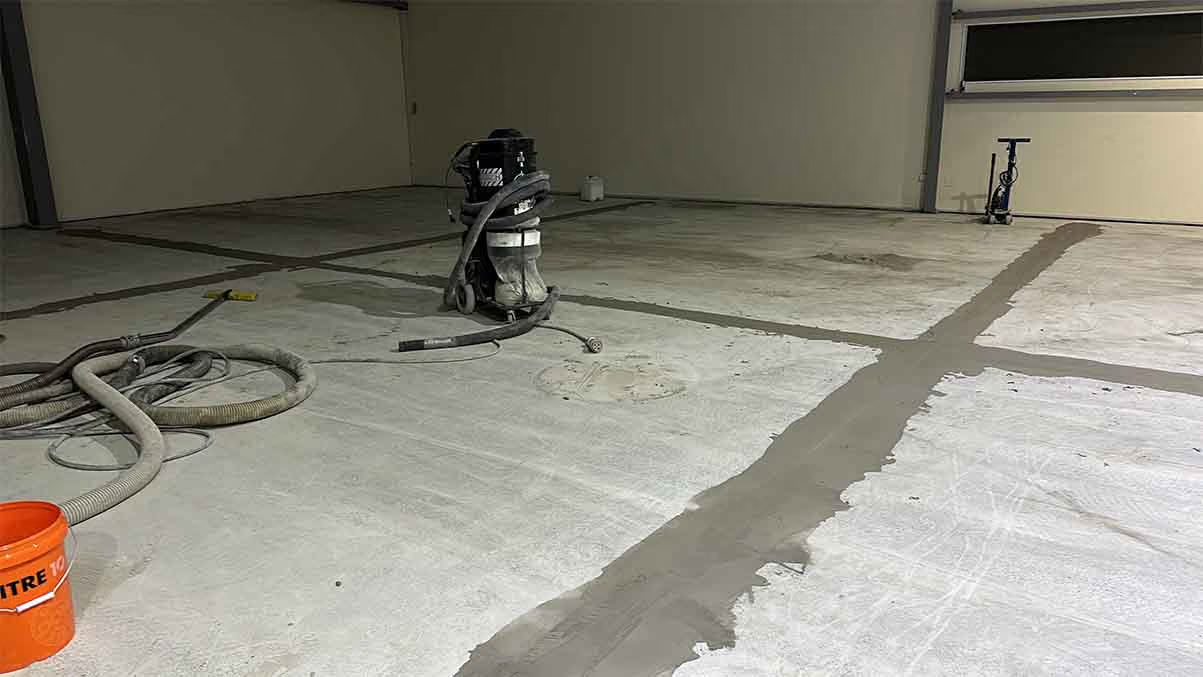
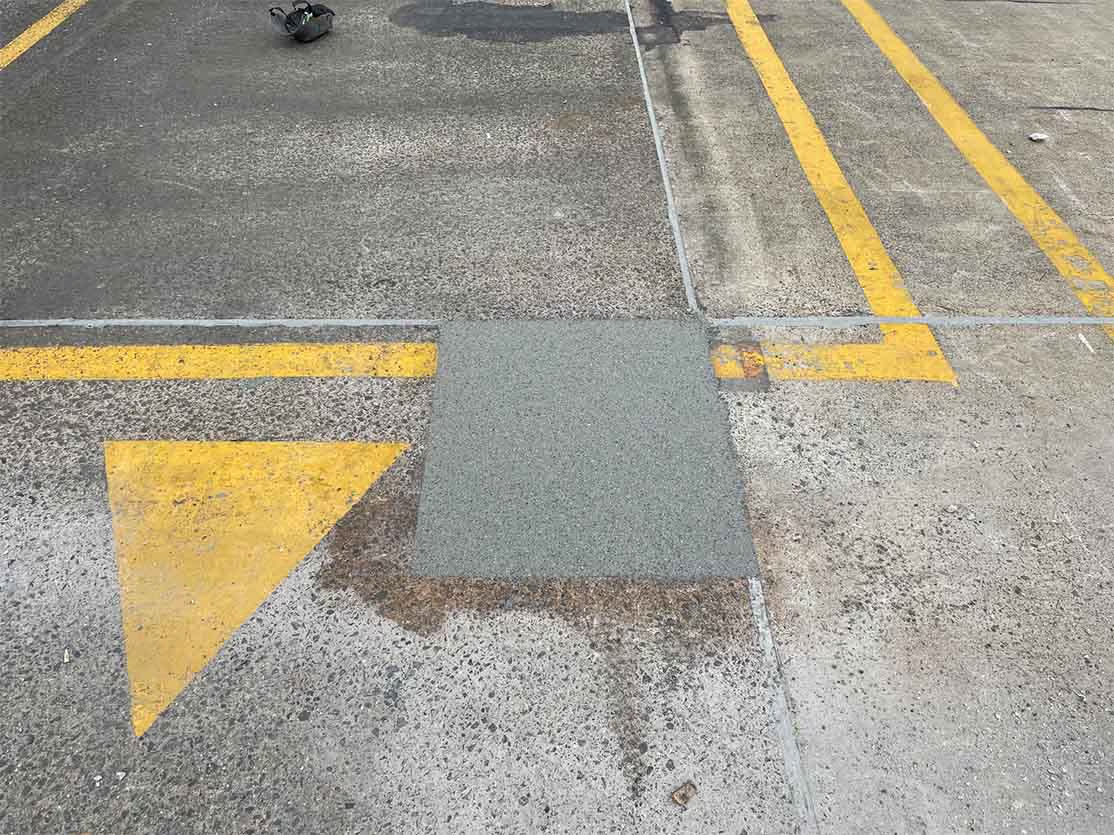
Driveways and paths, where weather and vehicles do most of the damage. Garage floors, especially around doors and where water gets in. Interior floors being prepared for a new finish. Steps and edges, which take impact damage first. Warehouse and industrial floors, where damage spreads fastest under wheel traffic and where a broken patch of floor gets in the way of the operation.
Four steps, and the first one is where we tell you honestly how much work your concrete actually needs. Here's how it runs.
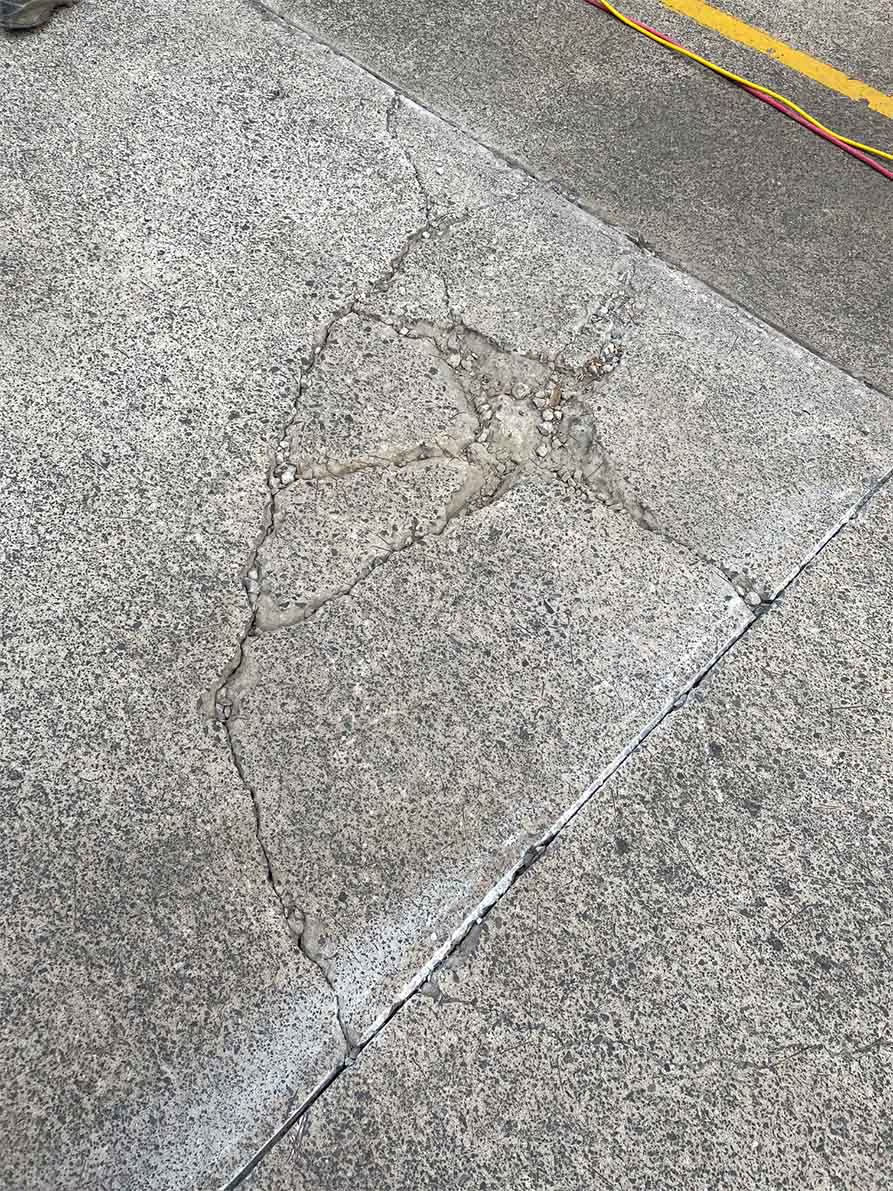
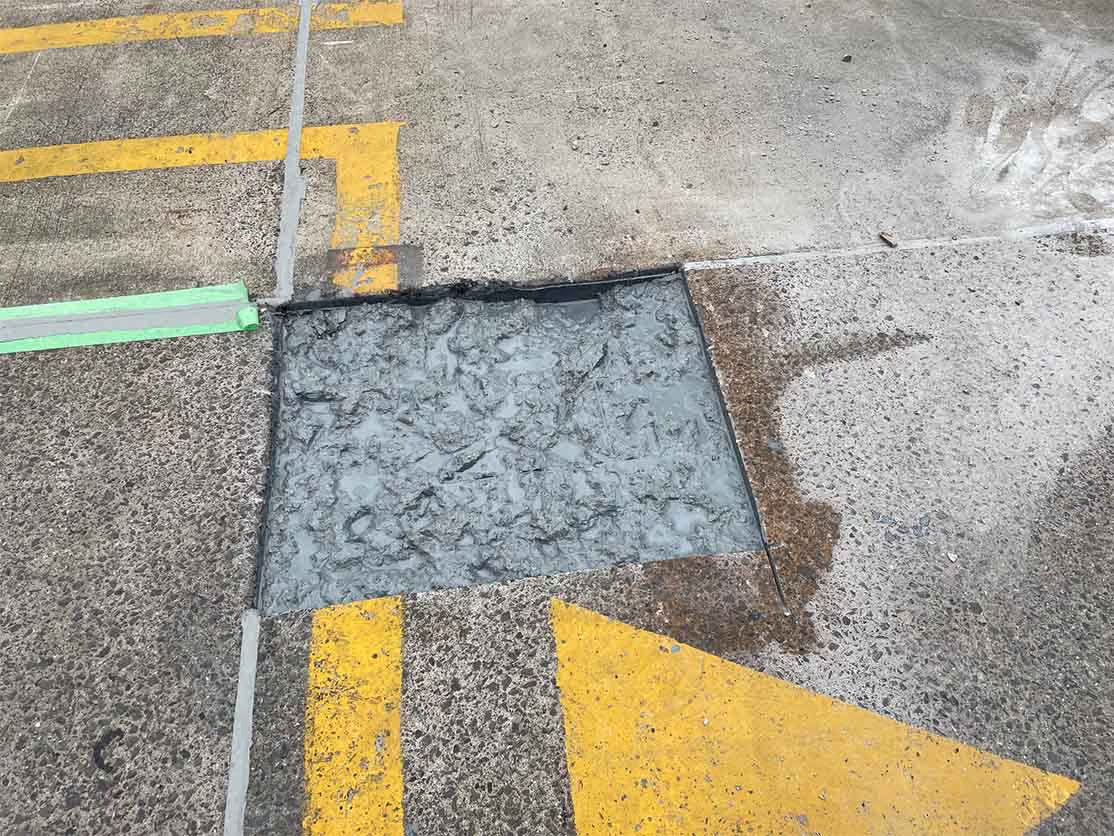
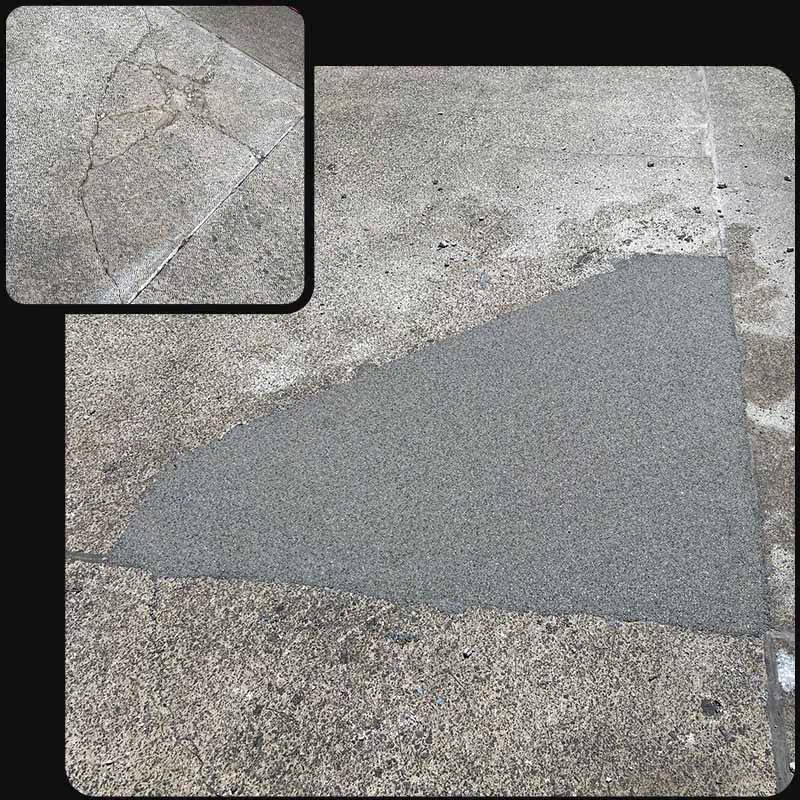
Usually not entirely, and anyone promising otherwise is overselling. Concrete varies in colour and texture, and a repair is new material in an old slab. We colour match where it matters and finish repairs carefully, and on a floor that's being polished or coated afterwards they blend in much better. We'll tell you what to expect before we start.
It depends on how much damage there is and how deep it goes. Small repairs are inexpensive. Widespread damage often makes grinding or resurfacing the better value option, which we'll tell you at the assessment.
Fine surface cracks in a driveway are very common and often don't need anything done. It's worth a look if a crack is wide enough to catch a fingernail, has a height difference across it, is getting longer or wider, or has water disappearing into it.
Yes, and it's one of the most common jobs we do. We cut back to sound concrete and rebuild the edge. The sooner it's done the less there is to rebuild.
No, we don't pour new slabs. That means when we tell you a slab is worth repairing, or worth replacing, we've got no stake in the answer either way.
Yes, that's the free assessment and there's no obligation attached to it. You can also send a photo through first if you'd rather get a rough idea before booking a visit.
No obligation and no call centre. Jay will look at the damage, tell you honestly what it needs, and if it needs anything at all, in Auckland you'll have a fixed price within 24 hours.