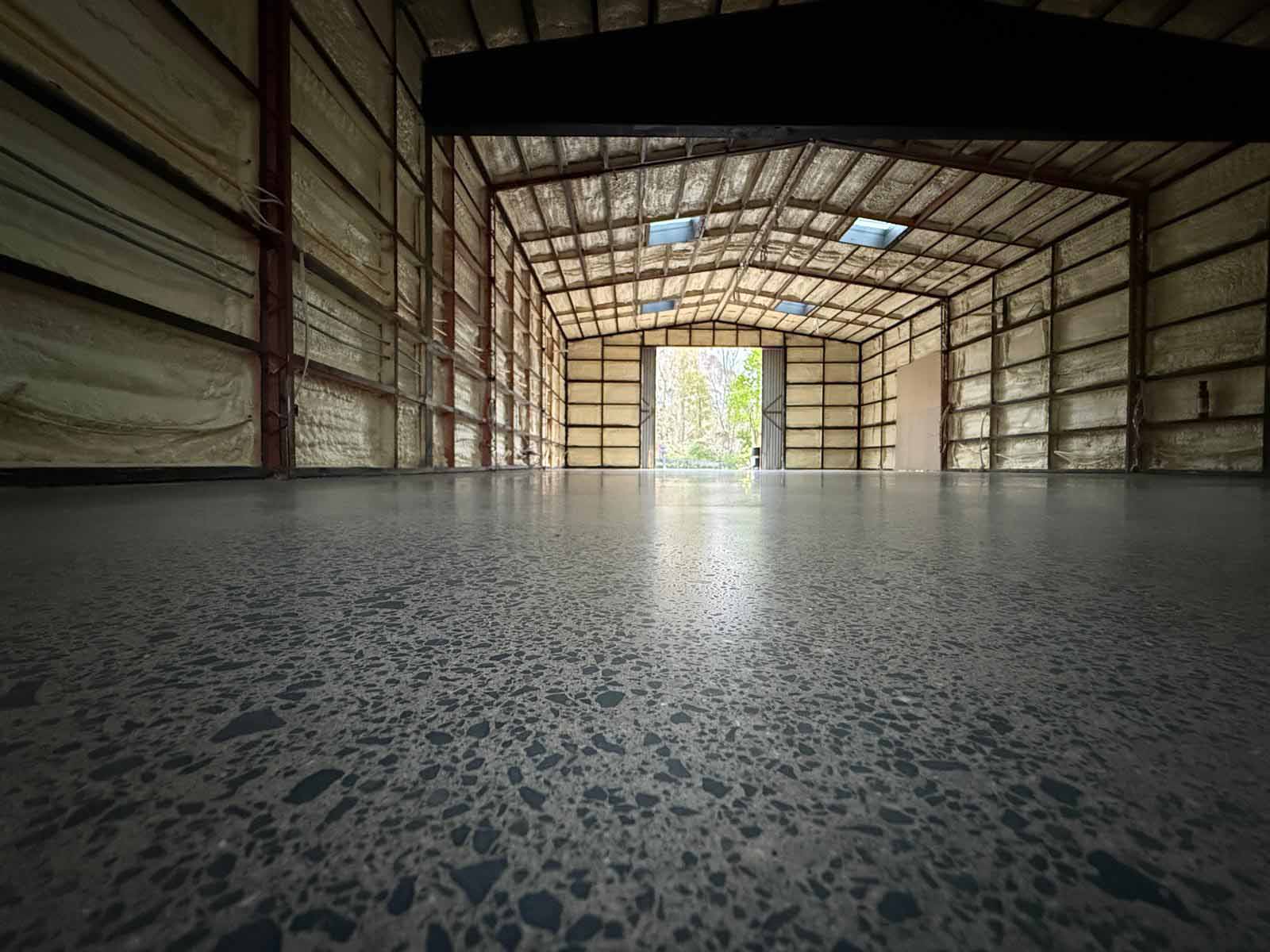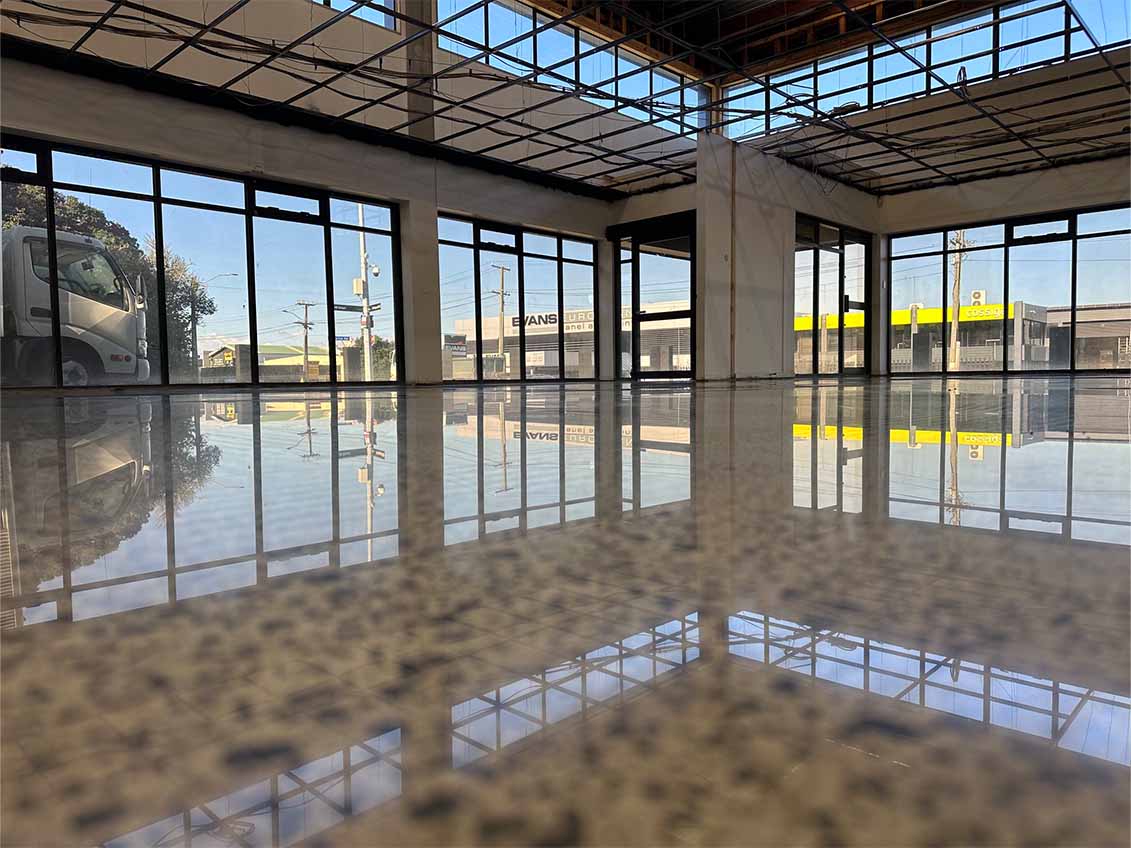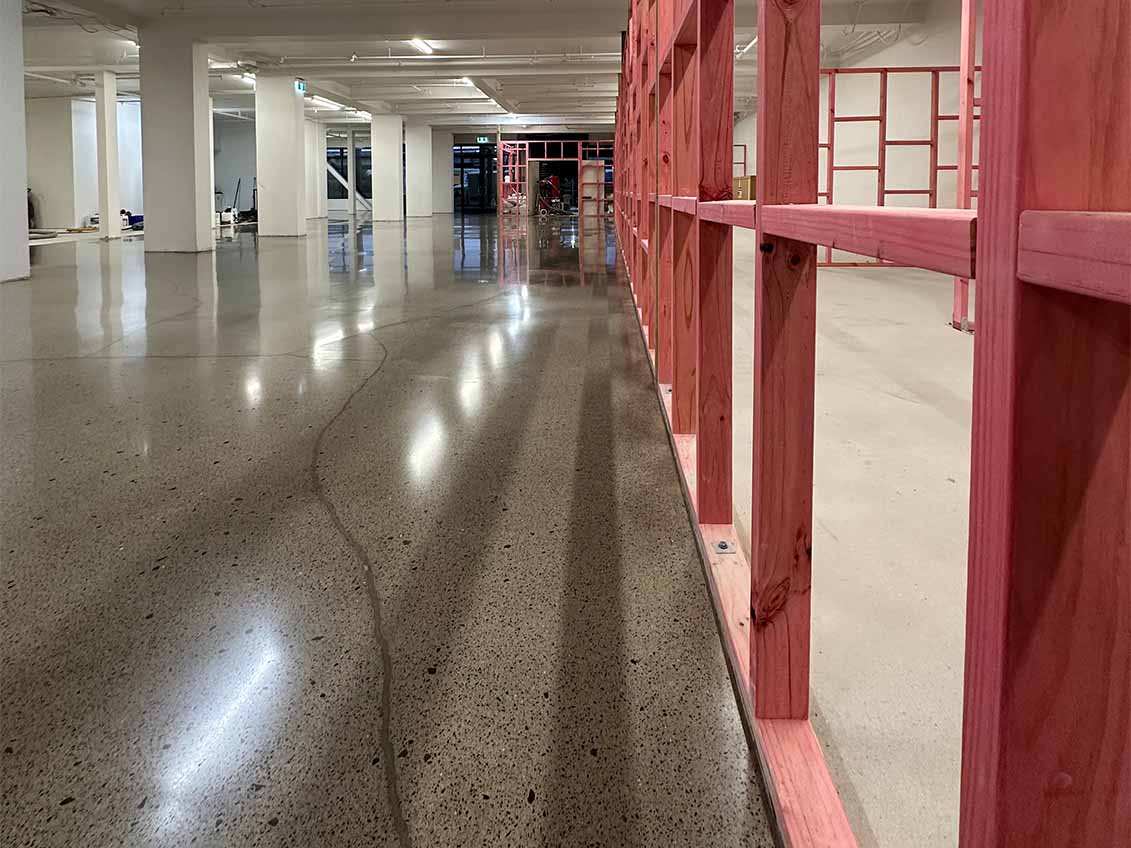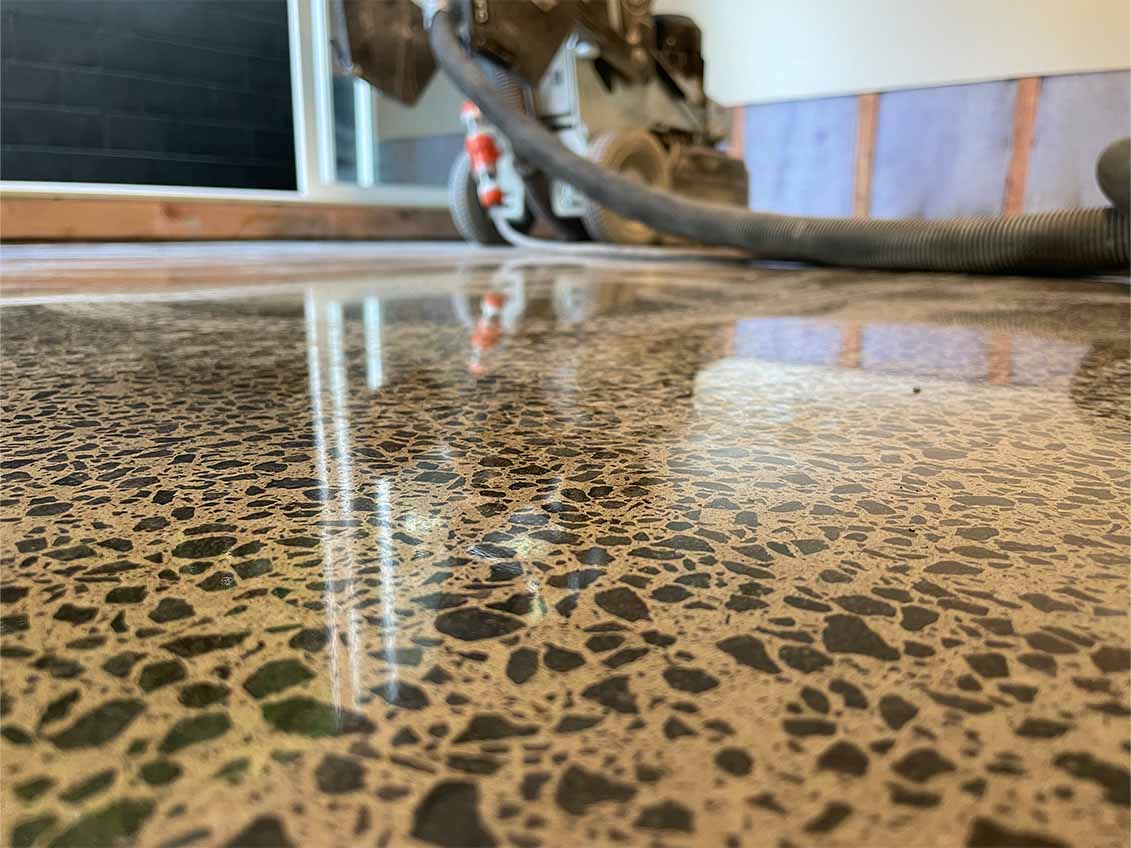
We texture the concrete itself rather than coating it, creating slip resistance that meets the New Zealand safety standard and won't peel off or need reapplying like a coating does. Ideal for pools, entranceways, ramps and anywhere people walk on wet concrete.


Most non-slip solutions are something you add. A grip coating, an adhesive strip, a sealer with grit mixed into it. They all work for a while, and they all wear out, because whatever you put on top of concrete eventually comes off it.
Bush hammering is different. Instead of adding anything, we texture the concrete surface itself. Specialist tooling works across the slab and creates a fine, even, textured finish in the concrete, so the grip is part of the floor. There's nothing to peel, nothing to reapply, and nothing that wears smooth in the busy spots while the edges stay rough.
The finish is called the PeterFell Texture Safe System, and it's tested to meet AS/NZS 3661.1, which is the New Zealand and Australian standard for slip resistance. Once the texture is done, a PeterFell sealer goes on to protect against staining and make the surface easier to clean.
The short version: it's the longest-lasting non-slip solution we offer, and the one we recommend anywhere the consequences of slipping are serious.
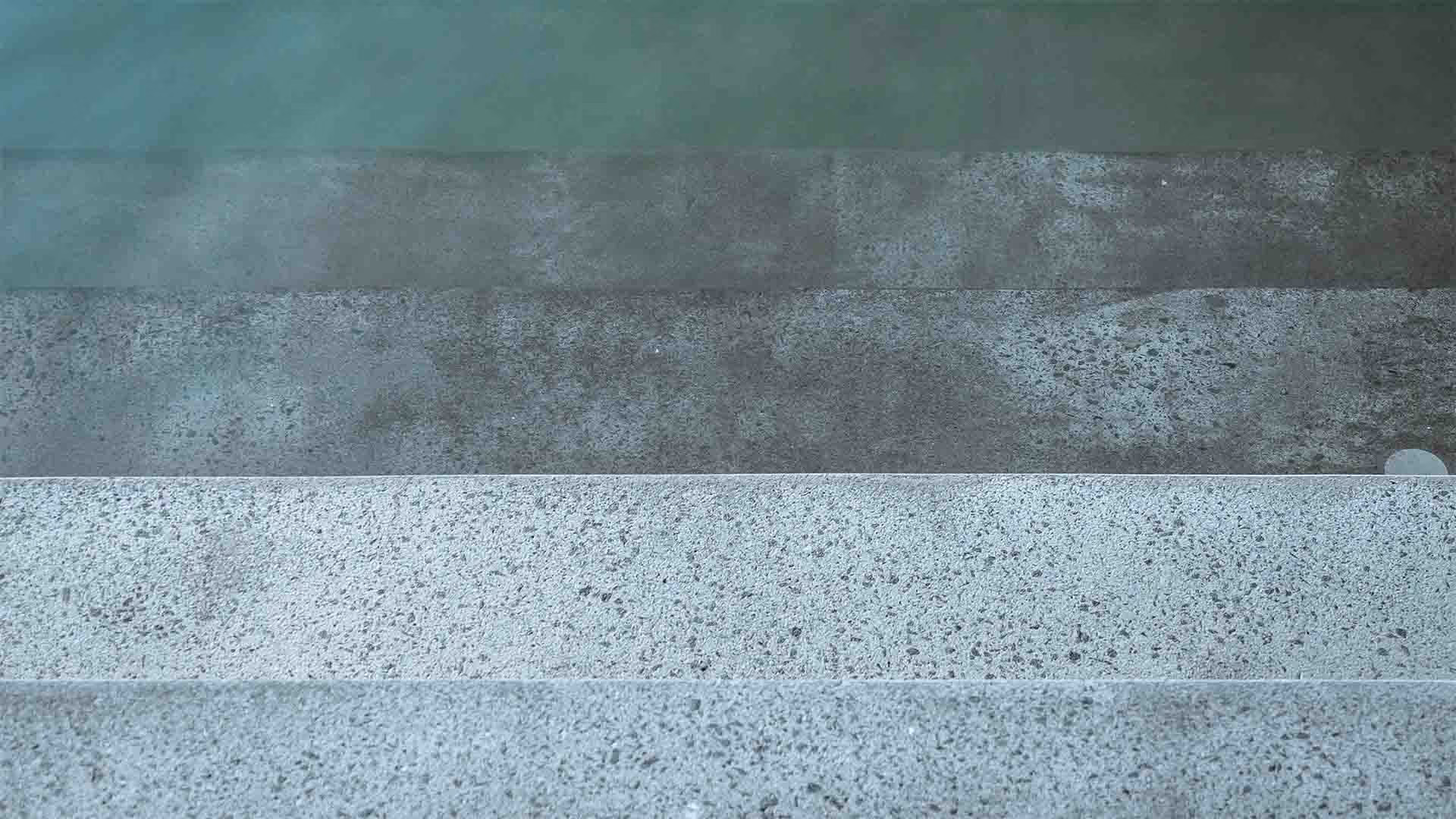
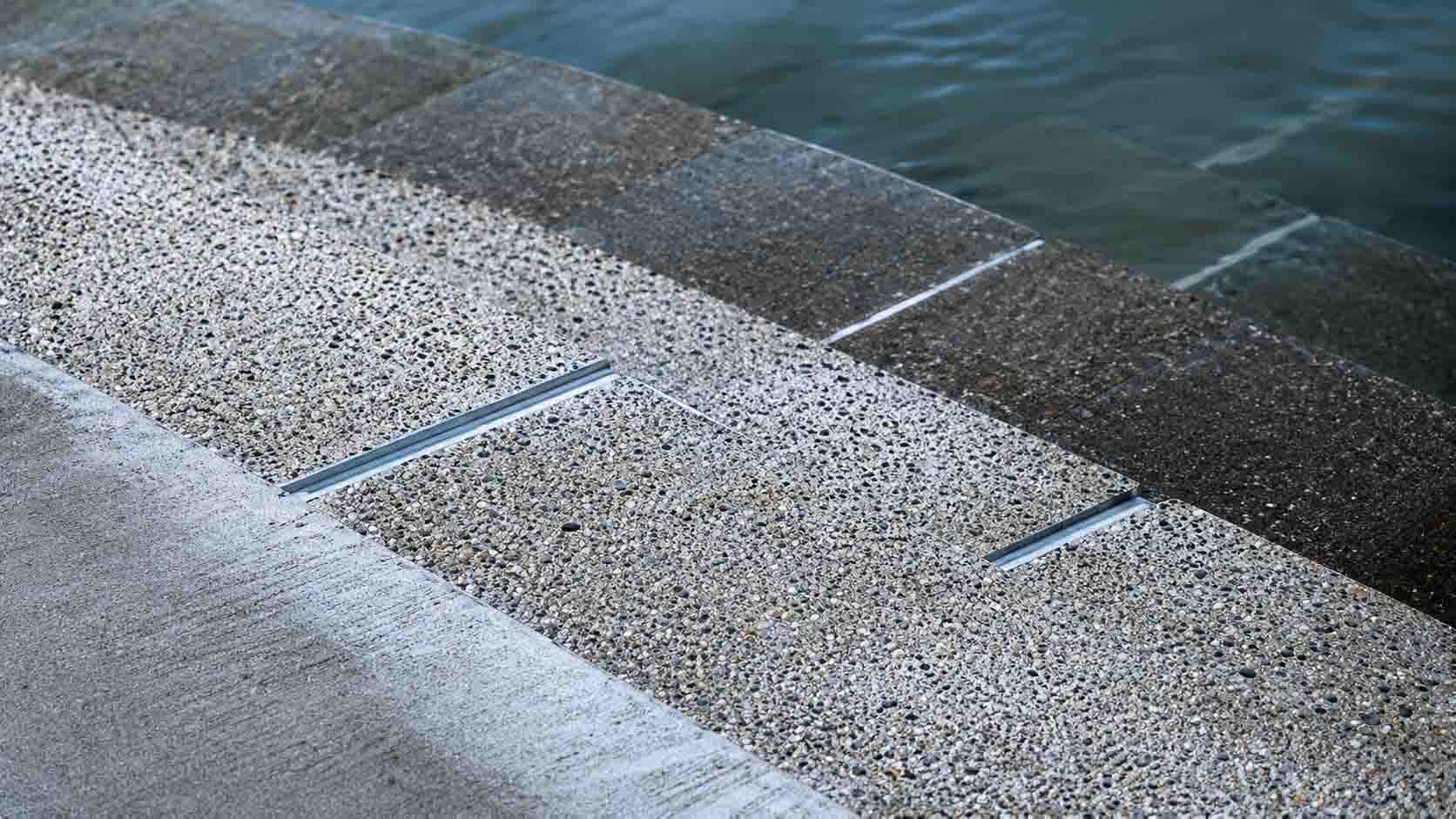
Wet feet, bare skin and hard concrete are a bad combination. This is the most common job we do with this system.
Outdoor steps are where most serious falls happen, and where a coating wears through fastest.
Where slip resistance isn't just sensible but often required.
The stretch of floor where wet shoes meet smooth concrete, in homes and commercial buildings alike.
Courtyards, walkways, plazas and anywhere the public walks and a building owner carries the liability.
Poolside showers, changing areas and anywhere concrete stays wet.
Anti-slip coatings and grit additives have their place, and we use them on epoxy floors where they suit the job. But they share a problem: they wear where people actually walk. A year or two in, the busy path across a pool surround is smooth again while the edges are still rough, and the floor is now most slippery exactly where it's used most.
Bush hammering doesn't have that failure mode, because the texture goes into the concrete rather than sitting on it. It also can't peel, can't be scrubbed off by cleaning, and doesn't need to be reapplied on a cycle.
For a pool surround, a public walkway or a commercial entrance, that difference is the whole argument. You're not buying a treatment. You're changing the surface.
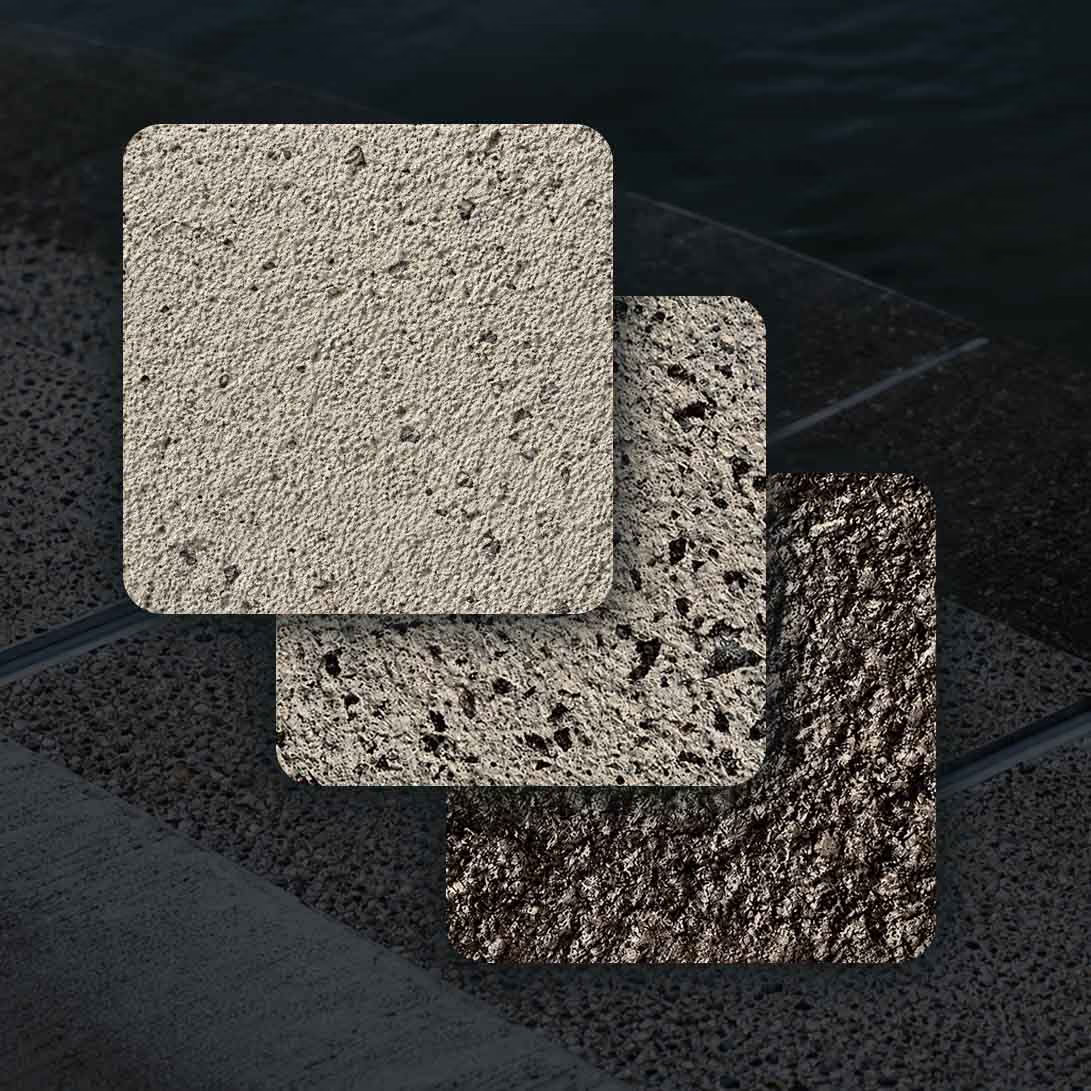
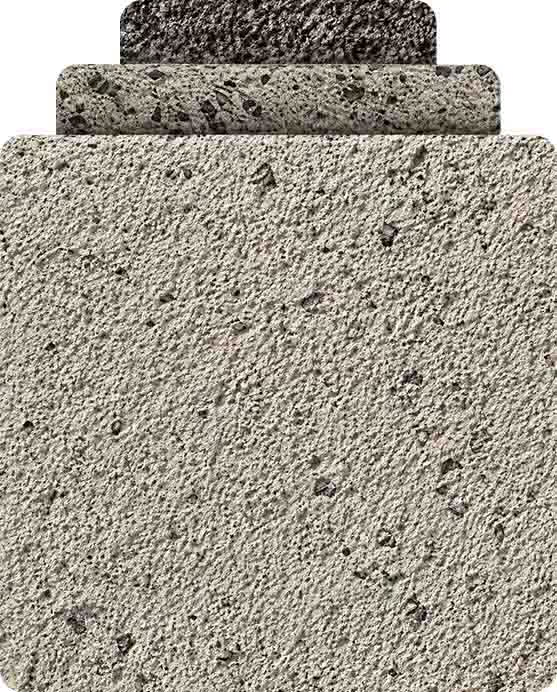
There's a balance to strike. More texture means more grip, but also a rougher surface underfoot and one that takes a little more effort to keep clean. Less texture is gentler on bare feet and easier to sweep, but gives up some grip.
The right answer depends on how wet the area gets, whether people are barefoot, how much foot traffic it takes, and how it will be cleaned. Around a pool where children run, grip wins. On a covered entranceway, a lighter texture is usually plenty.
This is why we always do a site visit before texturing, and why we agree the texture level with you on site rather than over the phone. Where possible we'll show you the finish on a test area first, so you're approving something you can see and feel rather than a description.
Fresh concrete needs time to cure before it can be textured. Depending on the slab and conditions, that's usually somewhere between 7 and 28 days. Texturing too early gives a poor result and can damage a slab that hasn't reached strength.
If you're building or landscaping, tell us early. We'll tell you the earliest sensible date and work in around the rest of your programme, which is far easier than trying to fit texturing in after everything else is finished and the pool is full.
A C2 hardener is applied as part of the system, which tightens the surface of the concrete and helps the texture stand up to traffic over the long term.
Five steps, and the one that matters most is the site visit where you decide how much grip you want. Here's how it works.
A textured surface holds a little more dirt than a smooth one, which is the honest trade for grip that lasts far longer than a coating. In practice it's straightforward: a regular wash down, and an occasional scrub in shaded areas where moss and algae like to settle. The sealer does most of the work by stopping stains soaking in.
The sealer is the part that eventually needs renewing, not the texture. When it's due, resealing is a simple job.
No, when the texture level is chosen properly. It's a fine, even texture rather than anything sharp, and around pools we deliberately pick a level that works for bare feet and wet skin. This is exactly why we agree the texture with you on site.
The system is tested to AS/NZS 3661.1, which is the recognised slip resistance standard here. If you need documentation for a building consent, insurer or health and safety file, tell us at the quote stage and we'll sort out what you need.
Both. Existing concrete is textured all the time, provided the slab is sound. New concrete needs to cure first, usually 7 to 28 days, before it can be textured.
A coating sits on top and wears through where people walk, so it needs reapplying. Bush hammering textures the concrete itself, so the grip lasts far longer, and it doesn't wear through in the busy spots the way a coating does. Coatings are cheaper up front and have their place, but for pools, steps and public areas we recommend the permanent option.
Yes, somewhat. Texturing gives the surface a finer, more matte, more uniform appearance, and it slightly lightens the look of most concrete. The test area at the site visit is there so you can see exactly what you're getting first.
In most cases, yes. We'll assess access and protection at the site visit and tell you honestly what's involved for your particular pool and surround.
No obligation and no call centre. Jay will look at your area, recommend the right level of texture, and in Auckland you'll have a fixed price within 24 hours.