Fixes
September 24, 2026
Why Can I Still See Tile Marks After Removing Old Tiles?
Tile ghosting is a pattern in the concrete, not on it. What causes it, how to check it with water, and how much grinding can take out.

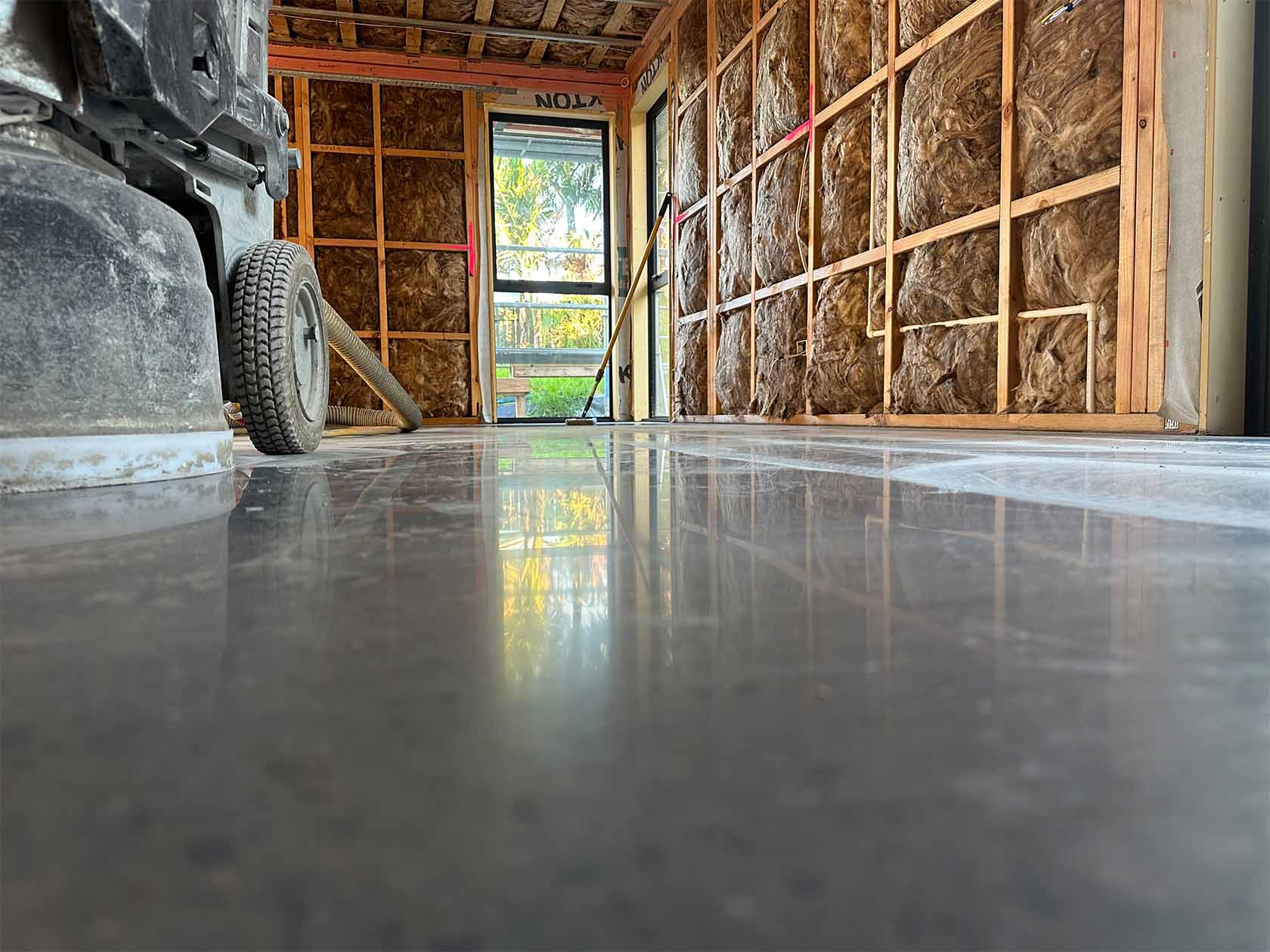
Tile ghosting is a pattern in the concrete, not on it. What causes it, how to check it with water, and how much grinding can take out.
Because the tiles have left a pattern in the concrete, not just on it. Adhesive, mortar and grout can soak into the surface, and the slab under each tile can age differently from the slab under the grout lines. The result is a faint grid, or a ghost of each tile. Grinding removes much of it and sometimes all of it. Sometimes a faint pattern stays, because it goes deeper than it makes sense to grind. A simple water test gives you a fair idea before anyone starts.
They look similar and behave differently. Residue sits on the surface: ridges of mortar, patches of glue, lumps you can feel. It all comes off with grinding, and removing it is standard floor preparation.
A shadow, or ghosting, is a colour difference in the concrete itself. It's flat, you can't feel it, and scraping does nothing to it.
A few things, often together.
Adhesive and mortar soaking in. Tile adhesive goes down in ridges or dabs. Where it touched the slab, moisture and fine material from it can soak into the surface and stain it in the same pattern.
Grout lines. Grout, especially coloured grout, can stain the concrete along every joint. Water getting through the grout lines over the years can make it worse.
Different conditions under each tile. The concrete under a tile and the concrete under a grout line spend years in slightly different conditions. That alone can leave a visible difference.
Old primers or sealers. Some slabs were primed or sealed before tiling, and that treatment can soak in unevenly.
Often, yes. Most ghosting sits near the surface, and grinding takes the surface away. The first cuts usually show how deep it goes.
The catch is that grinding deeper also changes the floor. The deeper you go, the more stone you expose. If the marks go deep, removing them completely can mean a heavier exposure than you wanted, and at some point it stops making sense to keep going. That's the honest limit: a faint pattern can remain in some floors, even after a good grind.
The water test. Once the tiles and the worst of the adhesive are off, sweep the floor clean and wet an area with clean water. Wet concrete gives a rough idea of how it will look once sealed. Marks you can clearly see when it's wet are the ones likely to need grinding out.
It's a rough guide, not a promise. Grinding changes the surface, so the floor afterwards may look better than the wet test suggests.
Live with it. Plenty of people decide a faint grid is part of the floor's history, the same way old repairs and joints are. It's usually softer in real life than in a photo.
Grind and seal. Grinding takes out what it can and a sealer protects the rest. It won't hide a strong pattern. More on Grind & Seal.
Cover it. An epoxy coating hides the slab completely. It suits garages, workshops and commercial floors more than living areas.
Grind flat for new flooring. If the slab is going under something else, the marks don't matter and the job is preparation only.
A few things make the next step easier.
Nobody can promise every mark will disappear before grinding starts. A contractor who does is guessing.
Send us a photo, ideally with a patch wetted down. There's more on what decides the outcome in can you polish an existing concrete slab.
Our on-site assessment is free with no obligation. In Auckland, you get a written fixed quote within 24 hours of the site visit. Call Jay at Concrete Grind Pro on 021 061 2597, or Get a Straight Answer.
Jay will come and look at it, tell you honestly which service it needs, and give you a fixed price. No obligation and no call centre.