Guides
September 24, 2026
Is Polished Concrete Slippery? Slip Ratings Explained
Polished concrete is fine when dry and can be slippery when wet. Here is how slip ratings work, how to check a floor yourself, and what to choose for wet areas.

Polished concrete is fine when dry and can be slippery when wet. Here is how slip ratings work, how to check a floor yourself, and what to choose for wet areas.
Polished concrete is not slippery when it is clean and dry. When it is wet, it can be, and the finer the polish, the smoother the surface. If a floor will get wet, ask for a lower shine or a non-slip finish before the work starts, not after.
Not in normal use. A clean, dry polished floor gives the grip you would expect from any hard floor. The exception is dust. Fine dust or grit on a smooth surface can make it slick underfoot, which is why a regular sweep matters more than most people think.
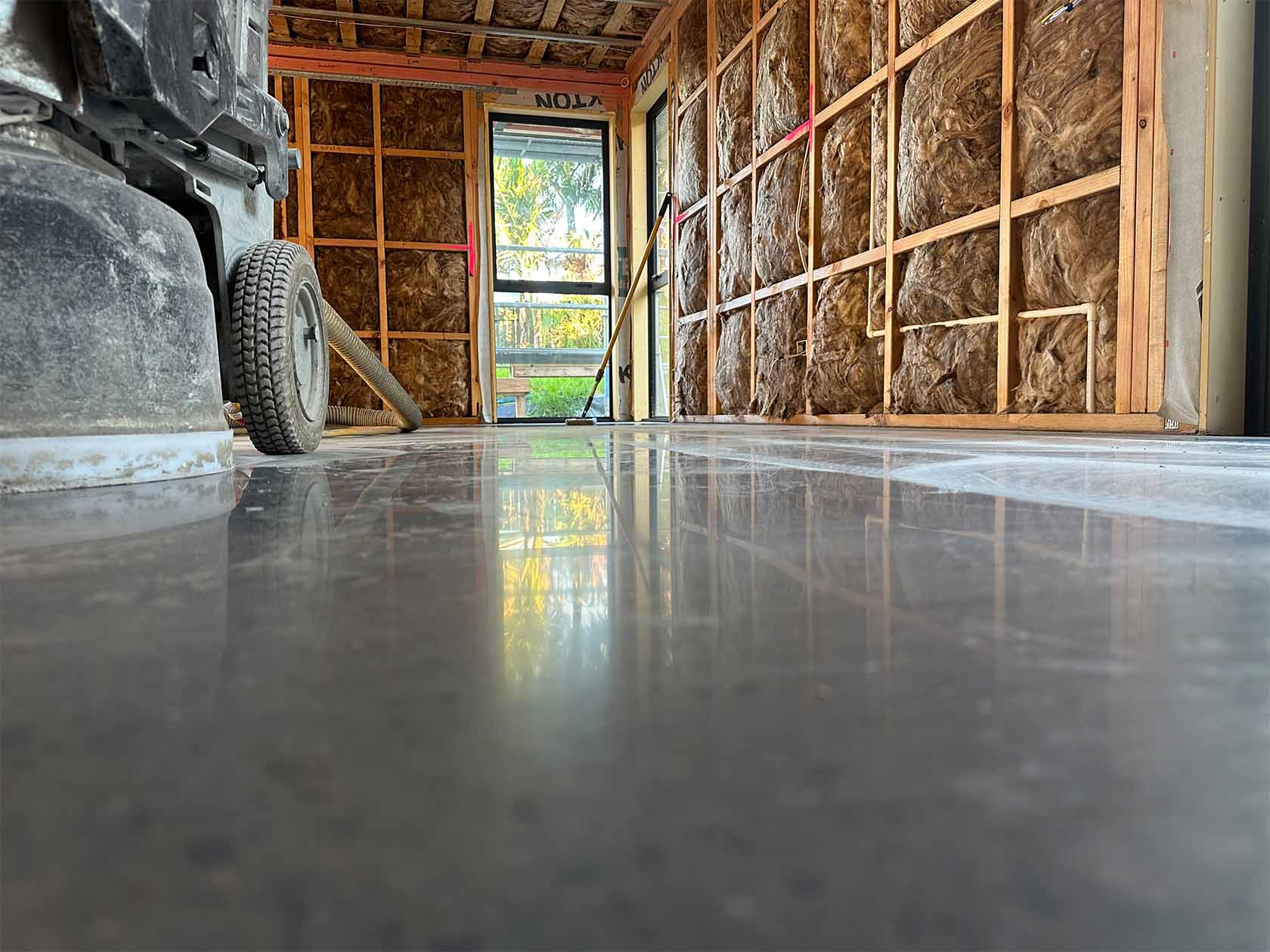
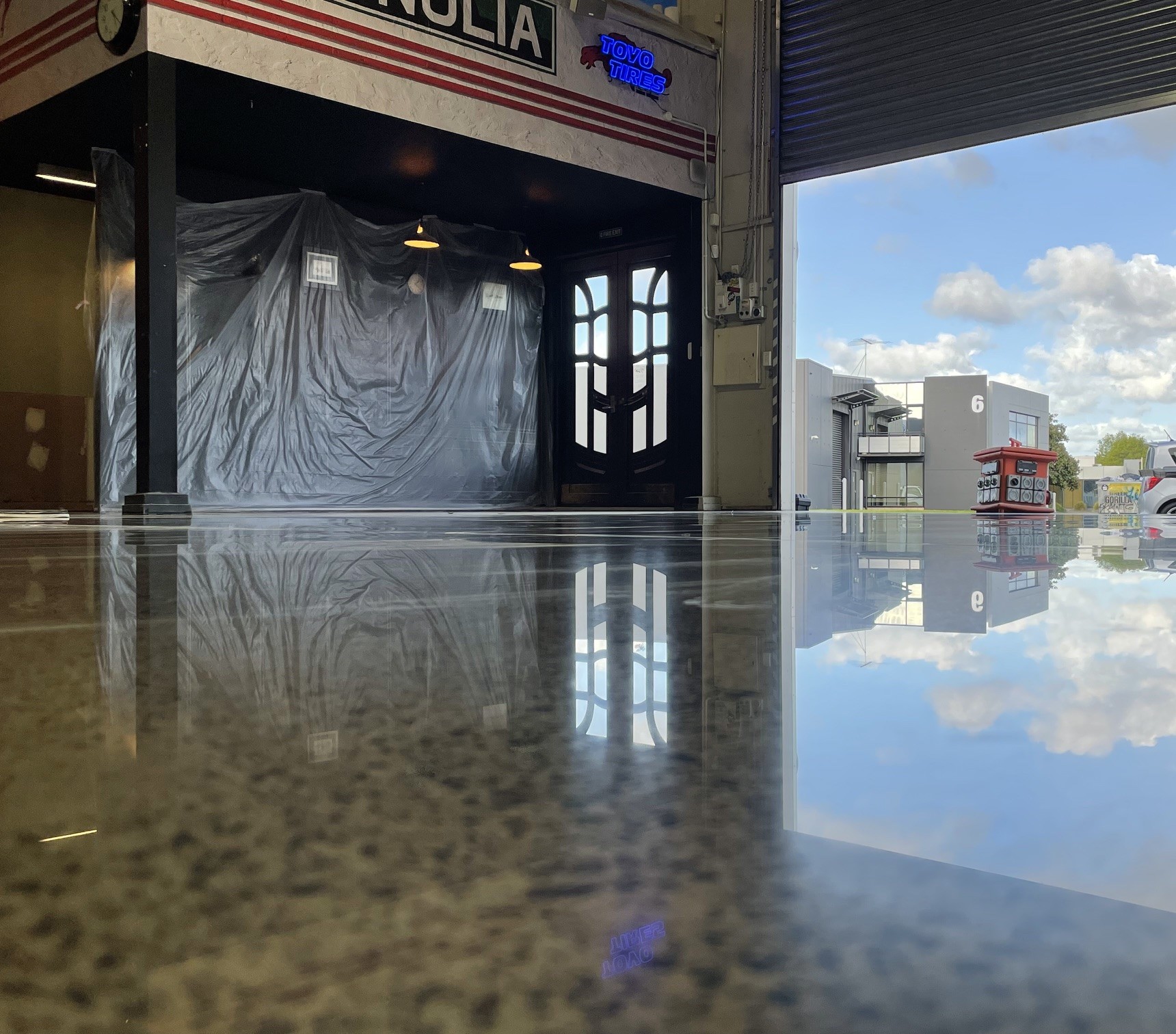
Polishing takes the slab through finer and finer stages. It is not genuinely polished until it is past 400 grit, and it can go to 800, 1,500 or 3,000. Every stage makes the surface smoother. Put a film of water, soap or oil on a very smooth surface and a shoe has very little to grip.
The shine is not the problem. The smoothness is. A glossy floor and a satin floor can both be safe or unsafe, depending on how much texture is left in the surface.
A slip rating is a test result that shows how much grip a surface gives, usually measured wet. One common on-site method is the pendulum test, where a rubber slider swings across the wet floor and the drag is measured. One standard you will see referred to in New Zealand is AS/NZS 3661.1.
A rating belongs to a specific floor and finish. A figure on a brochure does not prove anything about your slab. Ask for a test result on the actual floor, or ask what the finish has been tested to.
Any area where water, oil or soap is part of daily life. That means entrances, ramps and slopes, bathrooms and laundries, commercial kitchens and food prep areas, loading bays, and anywhere outdoors or under a roof edge that catches rain.
In a dry showroom, office or retail floor, a high polish is usually fine. In a wet area, it is worth choosing a different finish.
Stop the polish earlier. A lower polish stage leaves more texture in the surface. The trade-off is less shine.
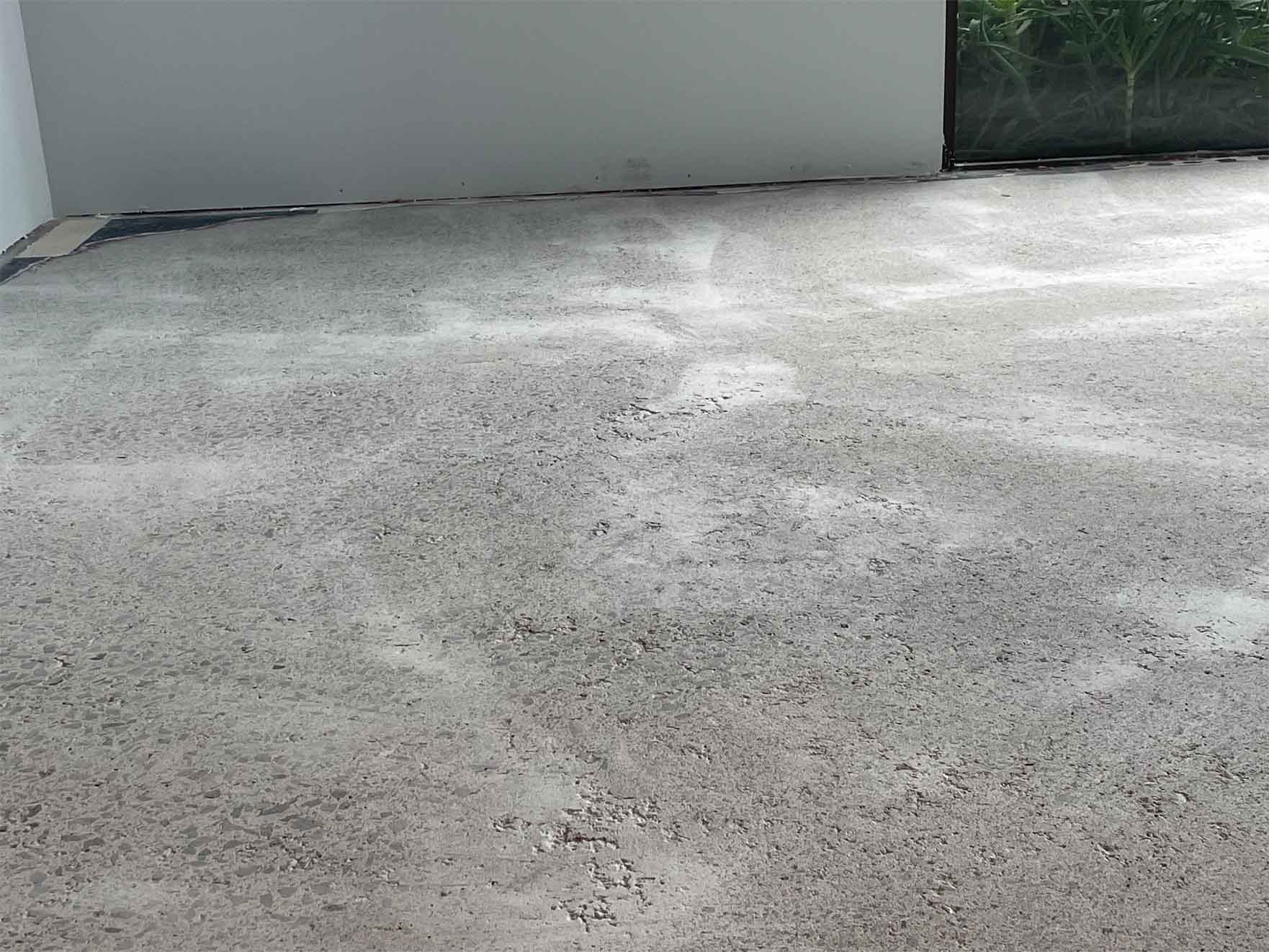
Grind and seal with a satin or matte finish. Grinding stops at 120 grit and a sealer goes on top. A non-slip additive can be added to the sealer. The sealer is a protective layer that wears, and it typically needs recoating every three to five years depending on traffic and whether the floor is inside or out. The added grip is part of that layer, so it is worth checking at each recoat. Read more about Grind & Seal.
Non-slip bush hammering. For areas that get properly wet, the surface is textured by hammering the concrete. We use the PeterFell Texture Safe System, which is tested to meet AS/NZS 3661.1. The texture is long-lasting, not permanent, because concrete can deteriorate over time. It is a rougher look and takes more effort to clean, so it suits wet zones rather than a showroom floor. Read more about Non-Slip Bush Hammering.
The slab has a say in all of this. Where the stone sits and how the concrete was placed sets what is achievable, so not every floor can reach every finish. That is why we look at the floor before recommending anything.
We do polishing and grind and seal, and we will recommend the cheaper option when it is the right one. Full details on Polished Concrete.
Pour a little water on a patch of the floor. Walk across it slowly in the shoes people will actually wear there, with something nearby to hold. Notice whether your feet skid or feel like they are gliding. Then try again with a light sprinkle of dust on the wet patch.
This is a rough check, not a test. It tells you whether to be concerned, not whether the floor passes. If it feels slick, get it tested before people walk on it every day.
A good contractor will answer these plainly. If the answers are vague, that tells you something too.
Our on-site assessment is free with no obligation. In Auckland, you get a written fixed quote within 24 hours of the site visit. Call Jay at Concrete Grind Pro on 021 061 2597, or Get a Straight Answer.
Jay will come and look at it, tell you honestly which service it needs, and give you a fixed price. No obligation and no call centre.